

Data has it that 61% of food waste comes from the food industry, highlighting the significant role restaurants play in the overall food waste crisis.
Approximately 29% of all food goes unsold or uneaten, contributing to the global food waste crisis. And yet, for too long, the industry response has largely been shrugs and “vague promises” about sustainability. Wasted food results in $2 billion in lost profits for restaurants annually, highlighting the significant financial implications of food waste. Which means if a restaurant spends $100,000 on food and 4% of it goes to waste, that translates to a loss of $4,000, which, btw, does not include additional costs related to labor and storage.
Hank Cardello says, “Over-serving is eroding margins. Fixing portions is one of the fastest ways to recover profits and reduce waste.”
Implementing food waste reduction measures can increase profitability by up to $8 for every $1 invested. So, again, the question is how to reduce food waste in restaurants? This guide answers the exact.
What You’ll Learn
- How to identify where food waste is happening through waste audits, inventory tracking, and operational analysis.
- Strategies to reduce waste using smarter inventory management, portion control, menu engineering, and staff training.
What’s the Difference Between Food Loss and Food Waste?
Food loss and food waste are two different sides of the same coin.
Food loss happens upstream, during production, storage, and transportation, where supply chain inefficiencies prevent food from ever reaching the kitchen in the first place. Food waste, on the other hand, occurs after food reaches your restaurant, whether through unused ingredients, spoilage, or leftovers on customers’ plates.
Restaurants and foodservice businesses generated 12.5 million tons of surplus food in 2024, with more than 85% of this waste ending up in landfills, representing a significant financial loss. Moreover, nearly 70% of this surplus came from plate waste, where customers do not eat what they have taken or been served.
What’s the environmental impact of this? Food decomposing in landfills produces methane, a greenhouse gas that is far more potent than CO2.
Why is a Food Waste Audit Important?
“To me, it’s sort of funny that wasting food is not taboo. It’s one of the last environmental ills that you can just get away with.”
– Jonathan Bloom, journalist and author of American Wasteland
You know, when restaurants decide to reduce food waste, most of them jump straight to adjusting their portion sizes or switching local suppliers, before ever knowing where the waste is really coming from.
A food waste audit fixes that.
Conducting a food waste audit involves assessing your operation by disposing of all wasted food in designated bins and sorting it at the end of each shift to identify frequently wasted foods and their main causes. A food waste audit requires creating a food logging system that includes relevant categories for the food products sold and other types of waste to track or reduce. To accurately measure food waste, restaurants should go through their trash during the audit period, separating waste into categories and documenting findings to understand waste patterns.
Tracking waste helps identify trends and informs inventory adjustments. Like, focus on what comes back too often from the dining room? Which prep processes generate the most food scraps? Which ingredients spoil before they’re put to use?
How Does Inventory Management Help in Food Waste Reduction?
Spoilage is largely an inventory problem. Practicing good inventory management involves ordering ingredients flexibly based on actual demand rather than on a fixed schedule, which helps reduce food waste. Using the FIFO (first in, first out) method in inventory management ensures that older food items are used before newer ones, helping minimize spoilage and waste.
Proper storage of ingredients at appropriate temperatures can also extend shelf life and prevent spoilage. Plus, you should keep fresh meat just above freezing and store fruit and vegetables separately, since ethylene from fruit accelerates spoilage.
Efficient inventory management can significantly reduce food waste by accurately forecasting demand and ordering just enough food to meet that demand, thus minimizing overstock and spoilage. You can further improve demand forecasting using whatever data you have available, including, but not limited to, historical daily sales, local events, and seasonal patterns.
Chains like Buffalo Wild Wings also use demand forecasting tools to optimize inventory and reduce over-ordering. Similarly, Ivoryy restaurant achieved measurably reduced waste as a key outcome of implementing better operational control systems, with recipe management providing accurate kitchen ingredient tracking, reducing excess purchasing at the source.
What Role Do Portion Sizes and Menu Design Play in Food Waste Prevention?
Reducing portion sizes can help minimize food waste, as smaller portions increase the likelihood that customers will finish their meals and reduce leftovers. Standardized recipes and smaller plate sizes can reduce waste by up to 20% in buffet settings. These aren’t small numbers, plus they encourage customers to actually finish what they’re served.
Menu engineering can also reduce the risk of single-item spoilage by using the same ingredients across multiple dishes. For example, if you have a piece of salmon, you can serve it as a grilled main or a tartare starter, and use it as a fish stock base, too. This way, implementing flexible menus allows restaurants to adapt to changing stock levels, using excess ingredients in new dishes or modified menu items to minimize waste.
Daily specials can utilize surplus ingredients, turning potential waste into revenue. This is one of the more practical tools any kitchen has, though it requires chefs who are comfortable improvising within a framework and managers who track what’s available before it spoils.
How Does Staff Training Fit Into Food Waste Management?
Training staff on food waste reduction strategies is essential, as informed employees can actively participate in minimizing waste through better practices and awareness. Involving kitchen staff in waste-reduction solutions can increase buy-in for sustainable practices.
Plus, repurposing kitchen scraps, such as using veggie trimmings for stocks, is an effective waste management strategy. Coffee grounds, citrus peels, meat bones, and excess dairy can all be used in multiple dishes when a kitchen has a culture of seeking them out. Tracking discarded food in waste logs allows for the identification of trends and adjustments in preparation or purchasing.
How to Reduce Food Waste in Restaurants Via Food Recovery and Food Rescue?
You must have seen many documentaries that highlight how restaurants throw away food while common people go hungry somewhere in the corners of the same cities. As Dana Gunders, President of ReFED, puts it, “Imagine walking out of a grocery store with four bags of groceries, dropping one in the parking lot, and just not bothering to pick it up. That’s essentially what we’re doing.”
So, what’s the solution? For starters, restaurants can donate surplus food to local food banks and shelters, which not only helps the community but also keeps food out of landfills and can provide tax benefits. Food recovery is both an ethical obligation and, practically speaking, a sensible business decision. Food rescue organizations in most cities will collect edible food that would otherwise be discarded, and the logistics have become considerably simpler as these networks have grown.
For what can’t be donated, composting is the next step. As zero-waste expert Kellogg notes, “Food should never be put in the landfill. Instead, you should be composting it. Food can’t break down in landfills instead.” Edible food that has passed the point of use, vegetable scraps, meat trimmings, and coffee grounds keep organic material out of landfills and, for restaurants with access to composting partners, can close the loop in a meaningful way.
INDUSTRY INSIGHT
| Food recovery is increasingly becoming a policy priority for most restaurants. The United Nations Sustainable Development Goal 12.3 calls for “halving per capita global food waste at the retail and consumer levels and reducing food losses along production and supply chains, including post-harvest losses by 2030,” prompting governments to encourage food donation, improve redistribution networks, and invest in waste-tracking technologies. As regulations evolve, restaurants that already measure waste and participate in food recovery programs will be better positioned to meet future compliance and ESG expectations. Look at this video: |
The Business Case for Less Food Waste & Its Environmental Impact
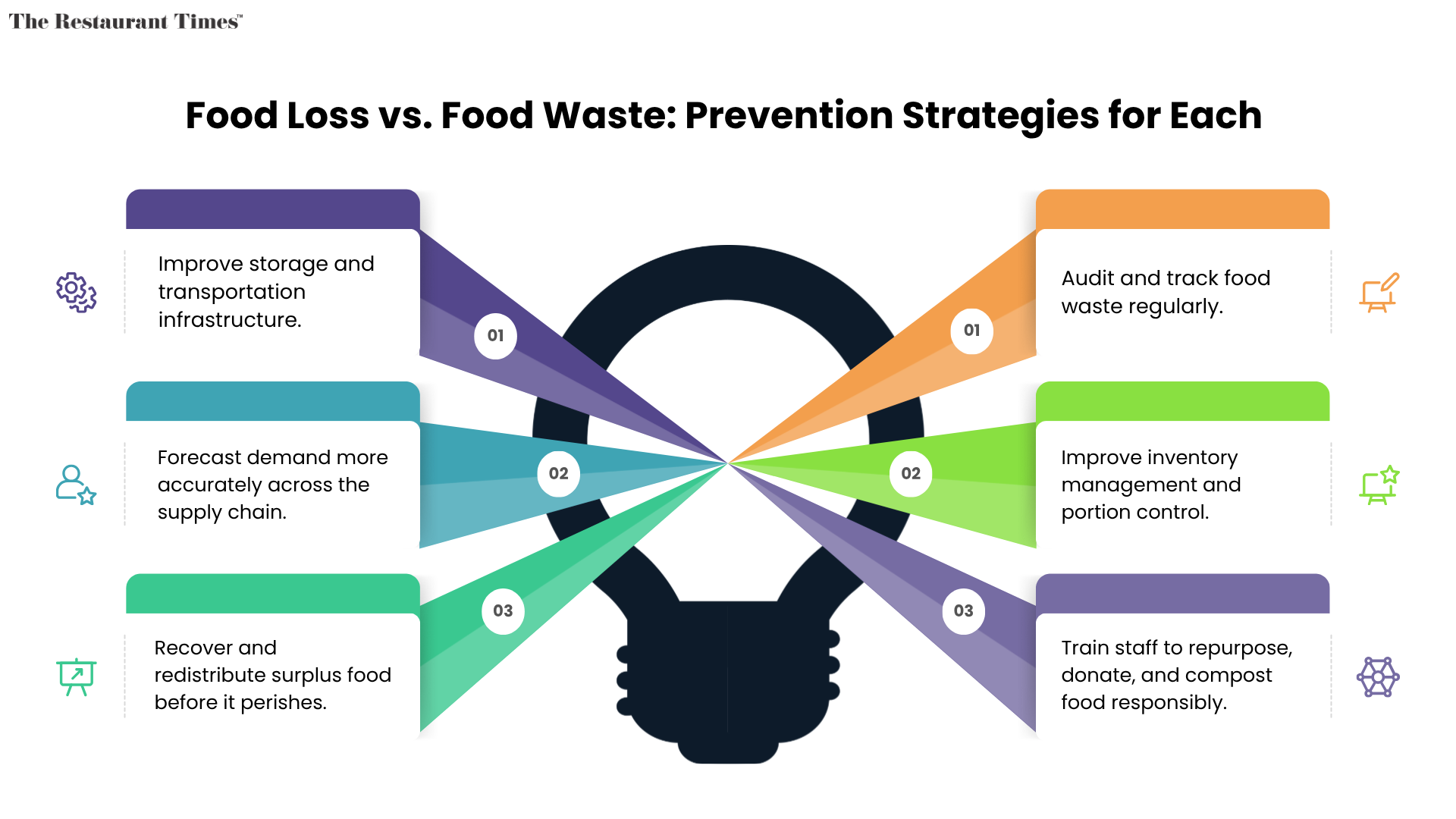
Effective restaurant food waste reduction strategies include tracking waste, adjusting portion sizes, modifying menus for ingredient cross-utilization, and donating surplus food. Together, these practices help rebuild margins, reduce operating costs, and improve sustainability.
Restaurant owners who treat food waste as a fixed cost are, more or less, choosing to accept losses that, with the right systems, are largely avoidable. What you should do instead is improve demand forecasting, train your team, conduct a waste audit, store food properly, and engineer your menu.
The restaurants that have already embedded waste reduction into their culture are the ones that have learned to waste less food and built a culture where every cook, server, and manager understands why that matters.
Afterall,
“In a world of seven billion people, set to grow to nine billion by 2050, wasting food makes no sense – economically, environmentally and ethically, aside from the cost implications, all the land, water, fertilisers and labour needed to grow that food is wasted – not to mention the generation of greenhouse gas emissions produced by food decomposing on landfill and the transport of food that is ultimately thrown away.”
– Achim Steiner, UN Under-Secretary-General and UNEP Executive Director
KEY TAKEAWAYS
| – Restaurants and foodservice businesses generated 12.5 million tons of surplus food in 2024, with nearly 70% of this surplus coming from plate waste, where customers do not eat what they have taken or been served. – Restaurants can reduce food waste by conducting food waste audits to identify frequently wasted foods and their causes, which can inform better inventory and menu management practices. – Better menu planning, demand forecasting, and using only what you need for daily operations help prevent food waste, reduce spoilage, and lower cost without affecting the guest experience. – Staff training, software solutions, and consistent efforts to track waste help restaurants create long-term food waste reduction initiatives that deliver less waste and save money. – Repurposing leftover ingredients, setting up a compost bin, and following food safety guidelines for food donation allow restaurants to handle excess food responsibly while reducing waste sent to landfills and supporting the environment. |
Frequently Asked Questions
1. How do you conduct a food waste audit in a restaurant?
Conduct a food waste audit by separating and weighing everything that is thrown away, categorizing waste, and using logs or software solutions to track waste over time. This will help you identify why food is wasted, improve menu planning, and prevent food waste before it affects profits.
2. What should restaurants do with excess food?
Restaurants should first repurpose safe leftover ingredients into new dishes. If excess food is still edible and meets food safety standards, it’s better to donate food through local food donors to help address food insecurity. Food that cannot be consumed, on the other hand, should be sent to a compost bin or a commercial compost facility.
3. How can staff training reduce restaurant food waste?
Staff training helps employees prepare only what is needed, minimize uneaten food, handle fresh fruits and other ingredients correctly, and follow portion standards. When teams understand food waste reduction initiatives, restaurants generate less waste, serve more food efficiently, and save money by reducing waste across the operation.