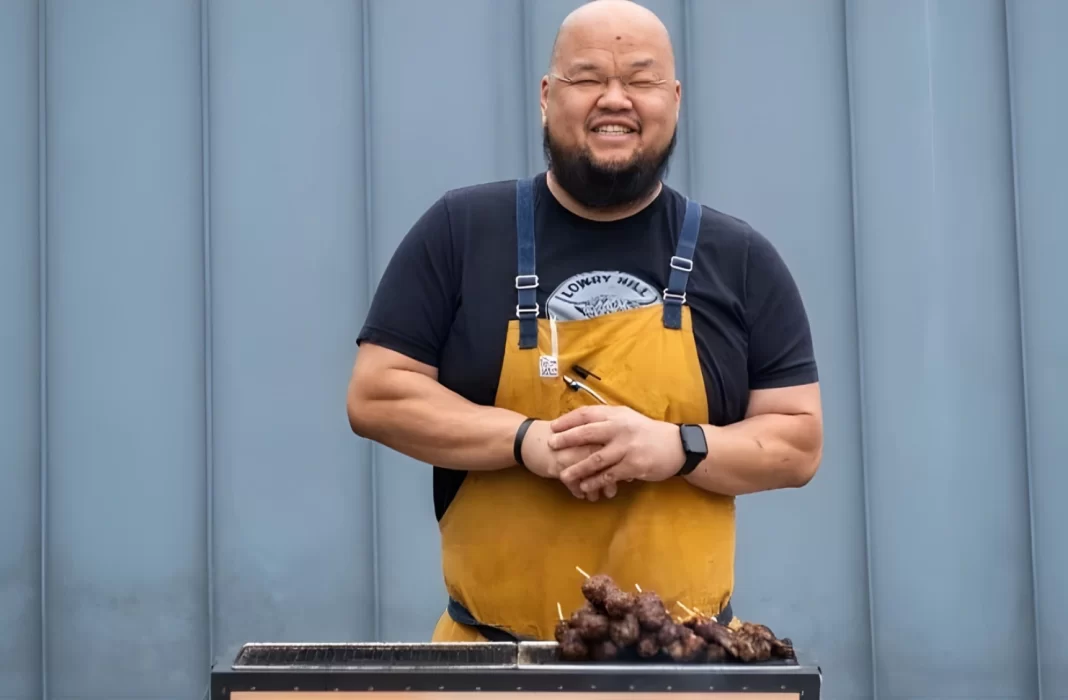

Yia Vang builds his fires with Minnesota oak and charcoal. He stuffs a whole red snapper with lemongrass, ginger, garlic, and shallots before laying the fish in a grill basket over the flames. Deboned chickens follow. Then pork with Hmong sofrito. Ribs rubbed with coffee. Head-on shrimp marinated in salt, fish sauce, and chile oil.
This is how the Hmong people have cooked for hundreds of years. In the hills of Laos. In the mountains. In refugee camps in Thailand. In Minneapolis, where the largest urban population of Hmong people outside Asia has built a life after being recruited to fight for America in the Vietnam War, and then were abandoned in those camps when repatriation failed.
Vinai opened in Minneapolis in July 2024. The restaurant takes its name from Ban Vinai, the refugee camp in Thailand where Vang was born. His parents lived there after the war. After fighting for a country that would deny them citizenship. After losing family members who died as patriots of America without ever setting foot on American soil.
“For a group of people that don’t have a land of their own, country of their own, flag of their own, what gets passed down historically about them is in their food,” Vang says to Eater. “Our cultural DNA is intricately woven into the food that we eat and, when you dine with us, you’re not just eating a meal, you’re not just eating a dish, you’re actually partaking in our history.”
Vinai landed on Eater’s 2024 list of the best new restaurants in the country. The New York Times included it on its list of the 50 best restaurants in the U.S., along with Diane’s Place, another Hmong restaurant that opened this spring. Vinai has become the standard-bearer for high-end Hmong food in Minnesota.
For Vang, the recognition feels like vindication. For years, Hmong food existed only at the affordable end of the spectrum in Minnesota. Food courts at Hmongtown Marketplace and Hmong Village served the community, but there were no formal restaurants. No white-tablecloth spaces. No places where Hmong cuisine could command the same respect as French or Italian, or Japanese food.
That gap had everything to do with economics and access. For decades, the Hmong community in Minnesota had lower per capita and household incomes than those of other ethnic groups. Census data shows those numbers have risen in the last ten years, but poverty levels remain high. Whether Vinai’s clientele will be drawn significantly from the Hmong community remains to be seen. But the restaurant exists as proof that Hmong food belongs at the high end of the market.
The Food That Carries Memory
The Vinai feast is communal. Meant to be eaten by hand. Flame-grilled meats and seafood laid out on banana leaves, which Vang calls “nature’s tinfoil.” Rice, noodles, and vegetables. Everything cooked over an open fire because that’s how his people have always cooked.
“This is actually a part of who I am,” Vang says. “This is how our people cooked hundreds of years ago. This is how our people cook today.”
The dried beef arrives first. Shaved over sticky rice. Simple. Grounding. Then the shrimp and pork toast, slathered with a green sauce that tastes like Indian cilantro-mint chutney but carries a funky kick. The grilled lamb heart comes on skewers with marinated and pickled vegetables, lettuce, and rice noodle bundles for wrapping. Two hot sauces arrive with it: Mama Vang, a crushed chili paste, and Fermented Shrimp Chilli, pungent and excellent.
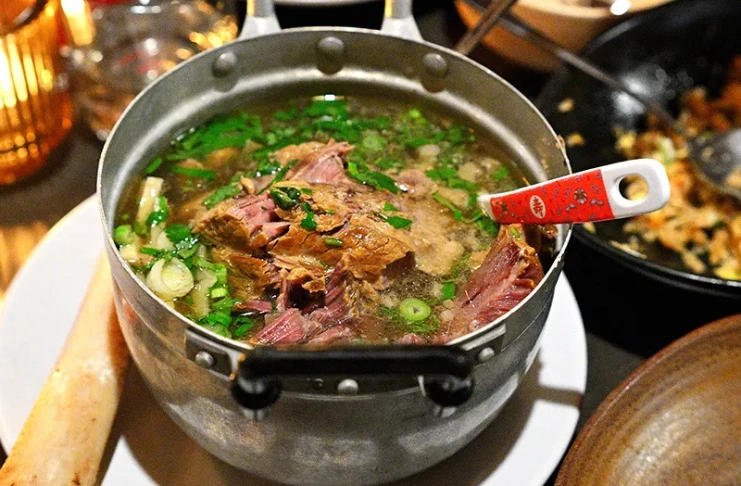
The Hilltribe Grilled Chicken is mostly deboned and flattened, served on a coconut-ginger vinaigrette. Some say the chicken is overcooked. Others say that’s how it’s meant to be. The braised beef rib arrives in a small, covered metal pot with a bone protruding. You uncover a massive, meaty rib in a lot of broth. The meat slides right off the bone. You portion it into bowls and slurp it up. For anyone who loves galbi-tang, this dish will feel like home.
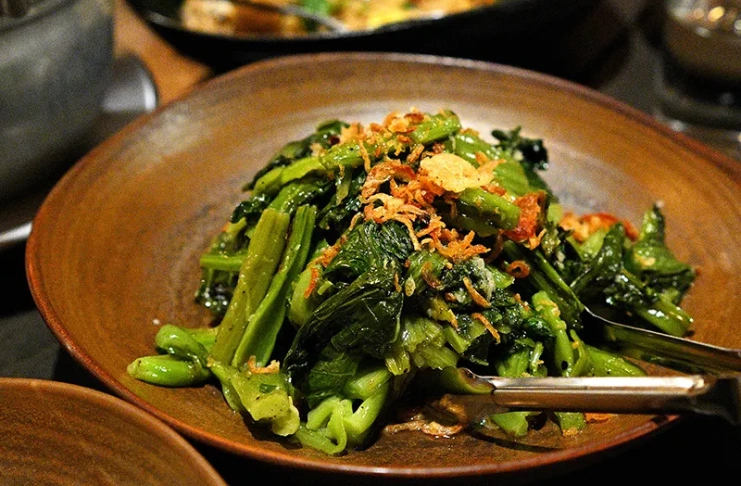
The stir-fried greens feature mostly mustard greens. The 802 Noodles, rice noodles, arrive cool and tangy. The crabby fried rice is very crabby and executed perfectly. Purple sticky rice is the vegetarian option. Both are necessary.
The MAC Snack is a nod to an after-school snack Vang ate as a kid. Cut-up mango, apple, and cucumber, dipped into chili-lime salt and fish-sauce caramel. It sounds strange. It tastes like childhood.
The Eggplant Dip That Became A Redemption Tour
As a kid, Vang hated his mom’s eggplant dip. His white friends came home from school to peanut butter and jelly sandwiches, bologna, and grilled cheese. Vang came home to roasted eggplant mashed with lime juice, garlic, Thai chili, and cilantro in a mortar and pestle. Eaten with sticky rice.
At his predominantly white school, when teachers asked what his favorite after-school snack was, Vang lied. You don’t tell people you eat “roasted eggplant mush” when you’re trying to fit in. You don’t talk about sticky rice when everyone else is talking about Lunchables.
Today, that eggplant dip is the dish that wowed Andrew Zimmern when Vang competed on “Iron Chef: Quest For An Iron Legend.” It’s the dish that represents everything Vang is trying to do with Vinai.
“This journey of food, the restaurant, and stuff that I’m doing is a redemption tour,” Vang told Mashed. “It’s going back to all those moments as a kid where you deny who you were because you were ashamed. I always talk about how it’s my way of telling my mom and dad that, ‘I’m sorry that I didn’t know.'”
He gets emotional talking about it. About the weight of carrying his parents’ stories. About the younger Hmong kids who come up to him and say they can finally tell their friends what they’re eating without feeling embarrassed. About how food has become a way to honor the people who fought and died for a country that denied them.
The Weight Of Citizenship
Last October, Vang became an American citizen. He posted about it on social media. A friend messaged him: “Dude, do you really want to be an American citizen? America right now? A lot of people don’t like America.”
Vang’s response: “It’s different when you’re born into citizenship, rather than earning citizenship.”
His grandfather from his dad’s side died in the war. Vang never knew him. Never went fishing with him. Never heard stories about him beyond the fact that he died fighting a war that wasn’t his. He died a patriot of America without ever becoming a citizen.
Vang’s uncles fought for a country that eventually denied them. When they got to this country, the citizens they fought for said, “Go back to your own country.” His dad is a true patriot. He was a patriot of America before he ever set foot in America.
“When I got that citizenship, this is for those who couldn’t do it,” Vang says. “This is for those who died and didn’t make it here. Now, when I say ‘I bear the weight,’ it’s a good weight on my shoulder, knowing that we get to talk about them, knowing that their heritage and their legacy echoes through us.”
The Iron Chef Decision
When Vang competed on “Iron Chef: Quest For An Iron Legend,” he made a choice. The whole menu would be strictly Hmong food.
He knew going in that the decision would probably cost him the win. The producers talked to him about taking a more global view. Vang said no.
“I told the executive producer, ‘This is what we’re going to do,'” Vang says. “That was really special to hear the response of Hmong people across the country, and across the world too, that responded back to that.”
A lady in France sent him an email. She grew up in a part of France where there were no Hmong people. She was watching the show because Dominique Crenn was on it. She saw Vang. She saw the food. She said, “I know that food.”
Vang teared up reading it. At the end of the day, he felt they made the right choice. They were proud of it.
The Space That Knows What It Is
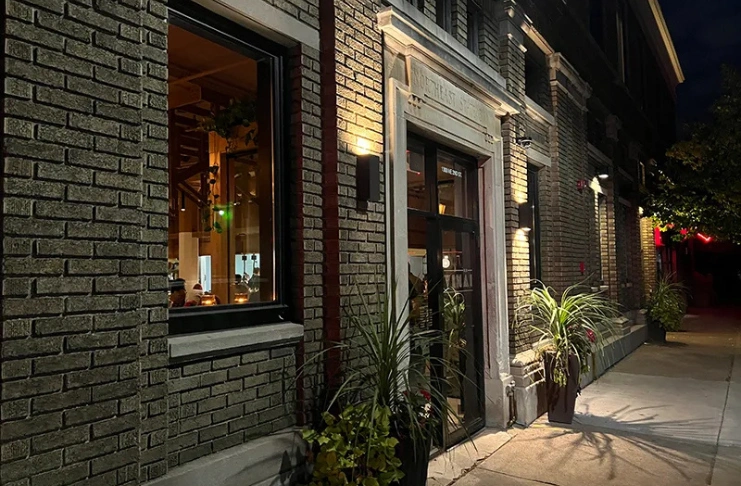
Vinai is larger than expected. The bar sits to the right as you enter, blending into a long counter overlooking an open kitchen. The dining room is split into two sections. A smaller section in the center with a few smaller tables and one long table for larger groups. The main section sits raised a few steps above it, with a bunch of two and four-tops.
The space was packed to the gills on a Saturday night and stayed that way throughout the meal. It’s busy and buzzing, but there’s space between the tables. It never feels too loud or cramped.
The vibe is warm. Intentional. The kind of place where you can see the wok flame leap, hear the knives on board. Dining becomes a performance. Not the polished quiet of fine dining, but something closer to street theater. Rhythm, sound, heat.
The Desserts That Remember Where They Came From
There are currently only two desserts on the menu. The Mango Madness features mango, coconut, and pineapple. Obviously Southeast Asian in flavor. The Chocolate Lava Cake gestures halfheartedly toward East Asia with some Sichuan peppercorn and chili crisp, but the pleasures are mostly molten chocolate and milk ice cream. Both are very tasty.
Dessert feels like an exhale. A moment to slow down after everything that came before it.
What Vinai Actually Does
Vinai exists because Yia Vang refused to let his people’s food stay invisible. Because he got tired of being ashamed of his mom’s eggplant dip. Because his grandfather died fighting for a country that never called him a citizen. Because the Hmong people don’t have a land of their own, a country of their own, a flag of their own. What they have is their food. And Vang decided that food deserved to be cooked over an open fire at a restaurant named after a refugee camp in Thailand.
The portions are generous. The prices are reasonable. With tax and tip, a meal for four comes to just under $300, or $75 per person. You will overorder. You will take leftovers home. You will remember the sound of the wok, the scent of lime, the first burst of flavor from the shrimp and pork toast.
You will remember how it felt. Alive, direct, honest. A homecoming for people who never had a home to return to.