

Exuberant Chennai-born Chef Koushik Shankar, aka ‘The Mad Chef’, commenced his gastronomic journey at the young age of five. He studied at the Institute of Hotel Management, Bangalore. Also known as ‘The Mad Chef’, he was given this name because, first, he is absolutely ‘mad’ about food, and second, he is from Madras, now known as Chennai. He has worked in some of the world’s most famous kitchens under the tutelage of the greatest stalwarts in the restaurant business.
His culinary journey has been thrilling, almost dream-like. Known for his inventive take and evangelizing modern fusion cuisine, he experiments with diverse ingredients and flavors to bring out his signature dishes. His company, Eatitude, is a complete Food and Beverage solutions provider. It is a consultancy that offers comprehensive end-to-end restaurant management services for entrepreneurs with different budgets and aspirations, looking for expert guidance while entering the restaurant industry!
The Making of The Mad Chef
Long before he started his consultancy, Koushik was very interested in experimenting with food (quite a lot, actually).
At just five years old, he recreated a Chinese dish whose recipe he found in a comic book. That “early experimental streak” stayed with him through school and into IHM Bangalore, where he apparently earned the nickname “Mad Chef” for presenting South Indian food with Continental-style plating, catching his instructors off guard.
His path to the kitchen wasn’t a straight line either. After a strained start with his family over his career choice, he spent a couple of years working odd jobs, including pharmaceutical sales and event emceeing, to fund his studies. After beginning his professional career in 1997 as a Trainee Chef de Partie at The Leela Kempinski in Mumbai, he went on to work with brands like Cafe Coffee Day, Java Green, and Qwiky’s. Along the way, he built expertise in culinary operations, training, and product development before eventually founding Eatitude in 2006.
Alongside his consulting work, Chef Koushik has also become a familiar face on food television. Over the years, he has appeared as a judge on MasterChef India – Tamil and made a guest appearance on Cooku with Comali in 2022.
In 2025, he returned to Cooku with Comali as a full-time judge for Season 6, bringing his fusion-cooking background to a wider Tamil audience. His industry recognition includes IFCA’s President’s Medal in 2023 and the Times Hospitality Icon award.
In Conversation with Chef Koushik Shankar of Eatitude Gourmet Technologists
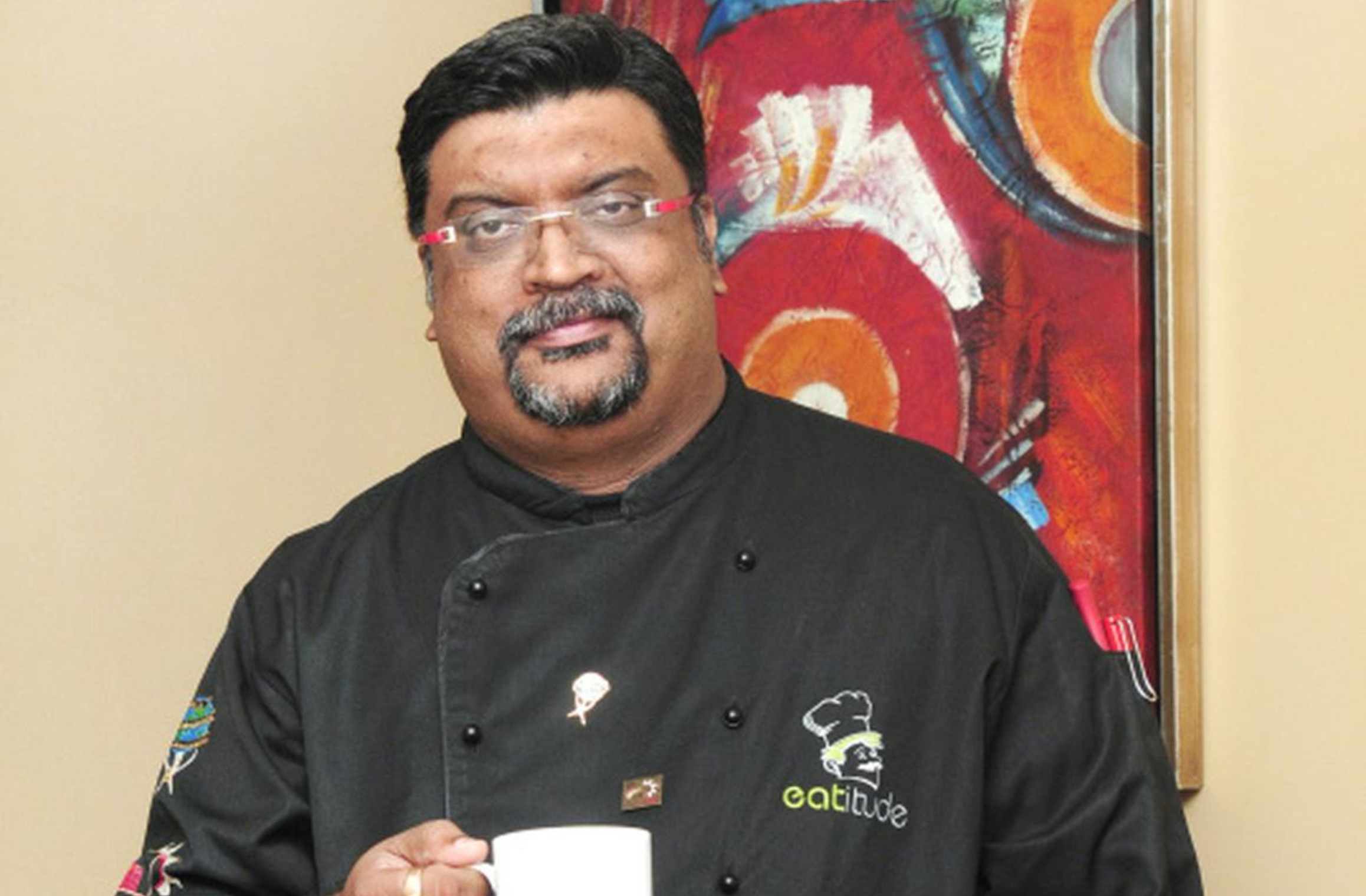
In an exclusive conversation with The Restaurant Times, Chef Koushik Shankar talks of his journey in the industry, the story behind his consultancy agency, why so many restaurants fail, and a lot more.
Role Of A Consultancy Agency While Entering The Restaurant Industry
Chef Koushik says that, as per the statistics, 9 out of 10 restaurants shut down in the first year of their operation. Entrepreneurs from diverse backgrounds are taking the plunge into the restaurant industry and facing a variety of challenges.
To avoid these challenges and make sure that your restaurant business runs into as few problems as possible when beginning its operations, you may need the services of a restaurant consultant.
A Restaurant Consultant provides perspective on the business plan for setting up a restaurant in a particular area and helps one launch and operate the restaurant business.
| “If you do not know what you are doing in the restaurant industry, you will be stuck,” says Chef Koushik. |
At Eatitude, they take care of the 6M’s of the restaurant industry- which include Menu, Manpower, Material, Machinery, Marketing, and Management. These are the six main areas to run a restaurant.
Eatitude helps with careful Menu Planning and curation, Recipe Development, Culinology, Recruitment and Training of manpower, Sourcing of tools and utensils, Kitchen Planning, Branding and Promotion of the restaurant, and Market Research!
4 Major Causes For Restaurant Failure
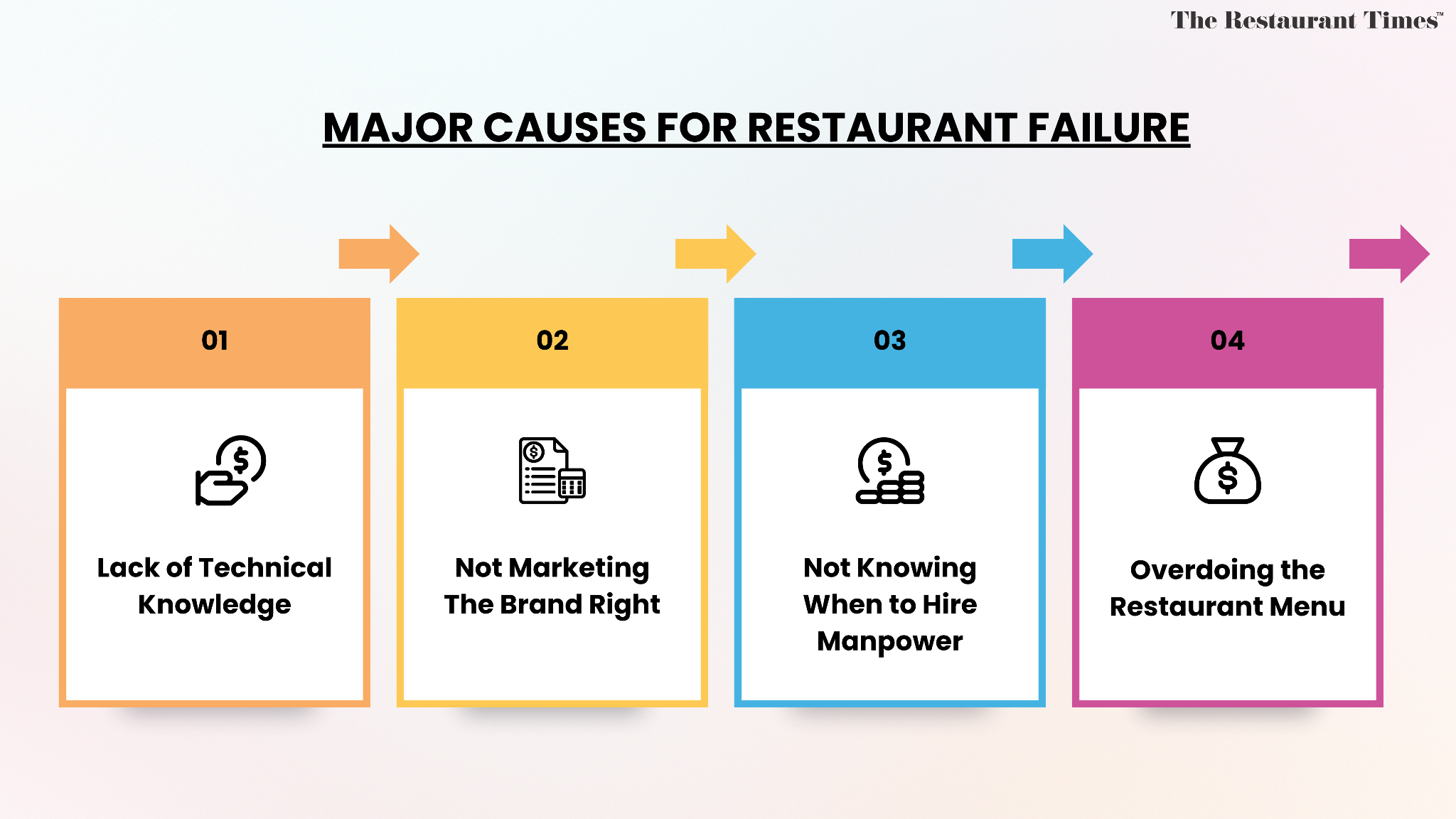
#1: Lack of Technical Knowledge:
New technologies are being introduced around the globe, and restaurateurs everywhere are employing them in several ways to best fit the wants and demands in their markets.
Having technical knowledge and experience in the restaurant industry is critical for an entrepreneur entering it, says Chef Koushik. Patrons practically identify convenience with technology. Restaurateurs lacking technical knowledge suffer greatly. Cloud-based POS systems, online ordering, feedback systems, chatbots, loyalty programs, automated reservations, and Kitchen Display Systems are some of the technical features that can be implemented in restaurants.
#2: Not Marketing The Brand Right:
Restaurant branding can set your food outlet apart, giving it a memorable ambiance that guests will want to experience time and again. Chef Koushik says that many times, restaurateurs forget that marketing their brand is crucial to creating brand awareness. Recall Value, Brand Identity, and Enhanced Credibility are some of the benefits derived from marketing the brand right.
#3: When to Hire Manpower:
According to Chef Koushik, it is essential to understand the right time to hire manpower for the restaurant. If you don’t recruit the right people, you won’t be successful. The biggest asset of any restaurant owner is their staff, and in the restaurant industry, they’re often the scarcest resource, so one needs to have a strategy in place for identifying them before you begin the recruiting process.
#4: Overdoing the Restaurant Menu:
Not only does the restaurant menu design influence the customer experience, but the restaurant’s profits also hinge on it.
Chef Koushik says that a big menu with a multitude of options more often confuses patrons, as they are not able to decide what to opt for, and so they default to the least profitable item.
3 Pro-Tips To Optimize Restaurant Chain Operations
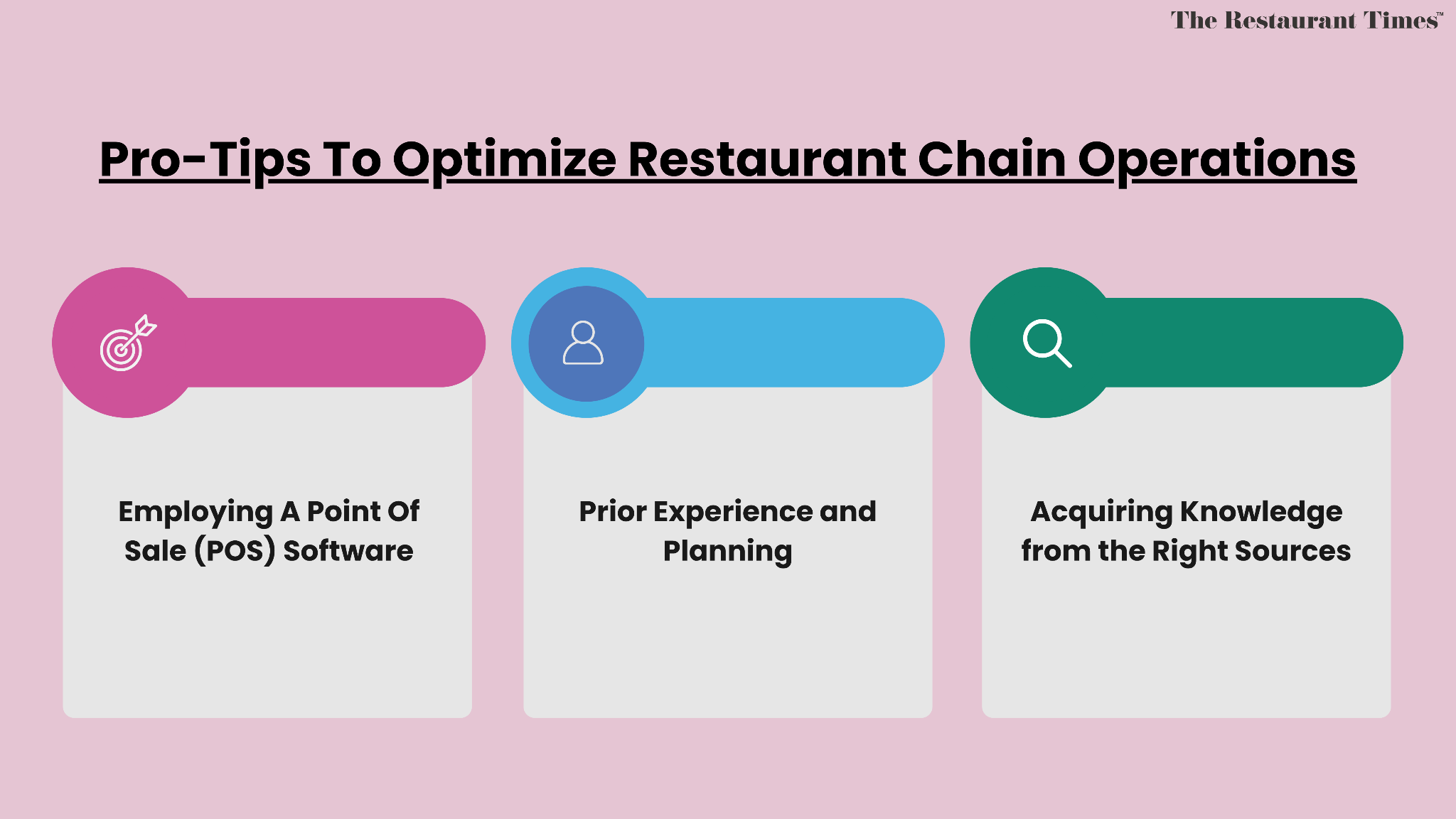
Employing A Point Of Sale (POS) Software:
Restaurant management software is the answer for restaurant owners who want to optimize operations across their restaurant chains, says Chef Koushik.
One of the easiest ways to ensure that you are notified about your restaurant operations on a daily basis is by bringing in POS software. The real-time reports will help monitor sales at the outlet, the total number of bills, discounts given, inventory, and footfall.
An effective POS helps compare the performance of different outlets and measure it.
Prior Experience and Planning:
It is essential for restaurateurs to have prior experience and/or professional training regarding restaurant chain operations. Inventory management, Vendor management, Purchase order management, and Consumption and variance management are key elements for smooth operations at a restaurant. POS technology combines all the elements of restaurant chain operations into a single platform, making running a restaurant chain simpler.
Acquiring Knowledge from the Right Sources:
According to Chef Koushik, it is imperative to acquire knowledge through the right sources, preferably from someone who has expert knowledge in this field. Knowing how to monitor sales reports, manage vendors, manage inventory, and maintain centralized marketing control are important aspects of optimizing chain operations, for which one may need expert guidance.
Factors Leading To High Food-Cost
Lack of Knowledge of Menu Design and Engineering: Sometimes, restaurateurs lack knowledge of menu design and menu engineering, which can lead to higher food costs. If a lot of food waste is occurring at your restaurant, you should reduce or replace specific menu items. It is advisable to either change the item’s placement in the menu or eliminate it entirely. The restaurant menu design should only include the most popular items. To maintain a fair profit margin, there should be a balance between high and low food costs.
Food Cost Control: Food costing is the ratio of the cost of the raw materials that make up a dish to the revenue generated by that dish. Chef Koushik says that the targeted ideal food cost used to be 25%, but now it is 35%. One can see that the increases and decreases in food costs are consistent, especially when you factor in the sharp increases in onion prices over the past few years. By tracking food prices, you can modify your menu to include more affordable alternatives, which will further help you control food costs.
Chef Koushik concludes that young entrepreneurs should not be swayed by the glamour of the restaurant industry. People have the wrong perception of the industry. The restaurant industry is cutthroat, making it essential for restaurateurs planning to enter it to gain firsthand experience!