

Isn’t the very idea that you can start a coffee business without having to put in a lot of money into construction, hiring, and overall operations super appealing? That’s a cafe kiosk model for you. What I’m trying to get you into here is basically a tiny, take-away-oriented coffee kiosk that lets you serve customers in high-traffic areas.
For aspiring entrepreneurs, the kiosk model reduces the initial investment you’d otherwise require to open a coffee business plus a coffee kiosk has very simple daily operations compared to a traditional coffee shop.
But I’d like to make this thing clear from the very start – a smaller footprint doesn’t guarantee profitability. How much you can make will depend on where your coffee kiosk is located, how you price your menu, how much your equipment costs, and the overall operating efficiency of your coffee business.
So, should you invest in a coffee kiosk? Let’s help you decide.
What You’ll Learn
- What is a coffee kiosk, and what are its costs, benefits, and available kiosk design options?
- How do you choose the right location, write your business plan, and build a profitable coffee kiosk business?
What is a Coffee Kiosk?
A coffee kiosk is a compact coffee outlet that is designed primarily for quick service and takeaway orders. Unlike a conventional coffee shop, a kiosk typically operates without a dedicated dining area, extensive food preparation facilities, or large seating arrangements.
Its smaller footprint allows operators to sell coffee, espresso-based beverages, tea, and selected snacks while keeping staffing and occupancy requirements relatively low.
Common formats of coffee kiosks include:
- Indoor coffee kiosk – As the name suggests, they are located inside shopping malls, office buildings, hospitals, and colleges.
- Outdoor coffee kiosk – They are kept out there in the open, like on a busy street, near a park, at pedestrian intersections, or outside a commercial building.
- Mobile coffee carts – They are best if you want to be at a location temporarily. For example, maybe there’s a corporate event, a festival, or a gathering that’ll go on for just a day, so you can park there.
- Drive-thru coffee kiosk – It serves motorists who want to grab coffee and go without having to leave their vehicle.
- Franchise coffee kiosk – Like any coffee franchise, this one operates under an established brand with access to its menu, training, supply chain, and SOPs.
Of these 5 kiosk models, which one should you pick? I’d say look into your budget, target customers, available space, and local permissions you might need before deciding on any one.
Why the Coffee Kiosk Models Appeal to Entrepreneurs
1. Lower Startup and Operating Costs
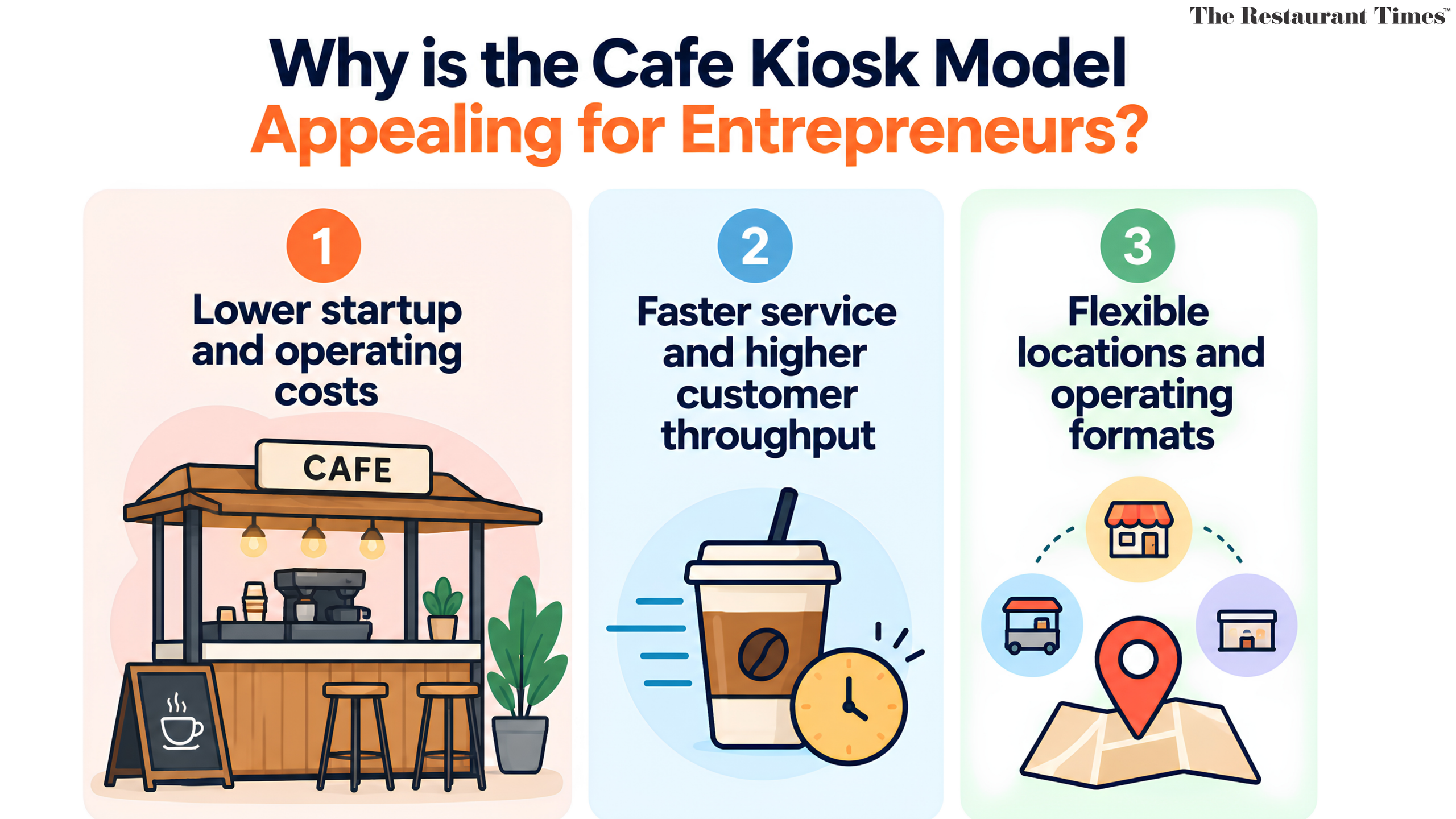
A coffee kiosk requires less capital because here you can avoid so many heavy expenses that come with when you want to launch a full-scale coffee shop with extensive interiors, large kitchens, dining tables, seating, and employees.
Since you’re getting into a compact coffee kiosk operation, you may only need to invest in an espresso machine, grinder, refrigeration, water supply, storage and display shelves, point-of-sale system, and preparation counter. As for the equipment requirements, they will vary according to what you plan to include in your menu.
2. Faster Service and Higher Customer Throughput
When you’re operating a coffee kiosk, you generally offer a super focused menu and have a streamlined, efficient workflow. This allows your employees to prepare more orders in less time and is more appealing to customers who prioritize convenience, like, let’s say, commuters, office workers, students, etc.
A well-positioned coffee kiosk can also benefit from impulse purchases. If someone is walking past a coffee counter, they may decide on the spot to actually buy one even when they had no such plan at first.
Mind this one thing, though: foot traffic is irrelevant if you do not measure how many passersby turn into paying customers, how much they spend, and whether whatever you earn from it can cover your operating expenses.
3. Flexible Locations and Operating Formats
Coffee kiosks can operate in high-traffic urban locations, including shopping malls, corporate campuses, educational institutions, and commercial streets.
Mobile coffee carts offer even better flexibility because you can relocate them between permitted sites or events as demand changes. But still, for that you’ll need to consider factors like weather exposure, electricity, water access, security, and local vending permissions.
Indoor and Outdoor Coffee Kiosk Design: Balancing Branding and Functionality
Good coffee kiosk design does a few things – it makes your coffee kiosk recognizable, eases employees’ work, and helps in attracting customers. But, again, it’s not enough to just create a visually appealing counter. It should be functional too – It should be able to support preparation, storage, payment, and collection. How do you achieve that?
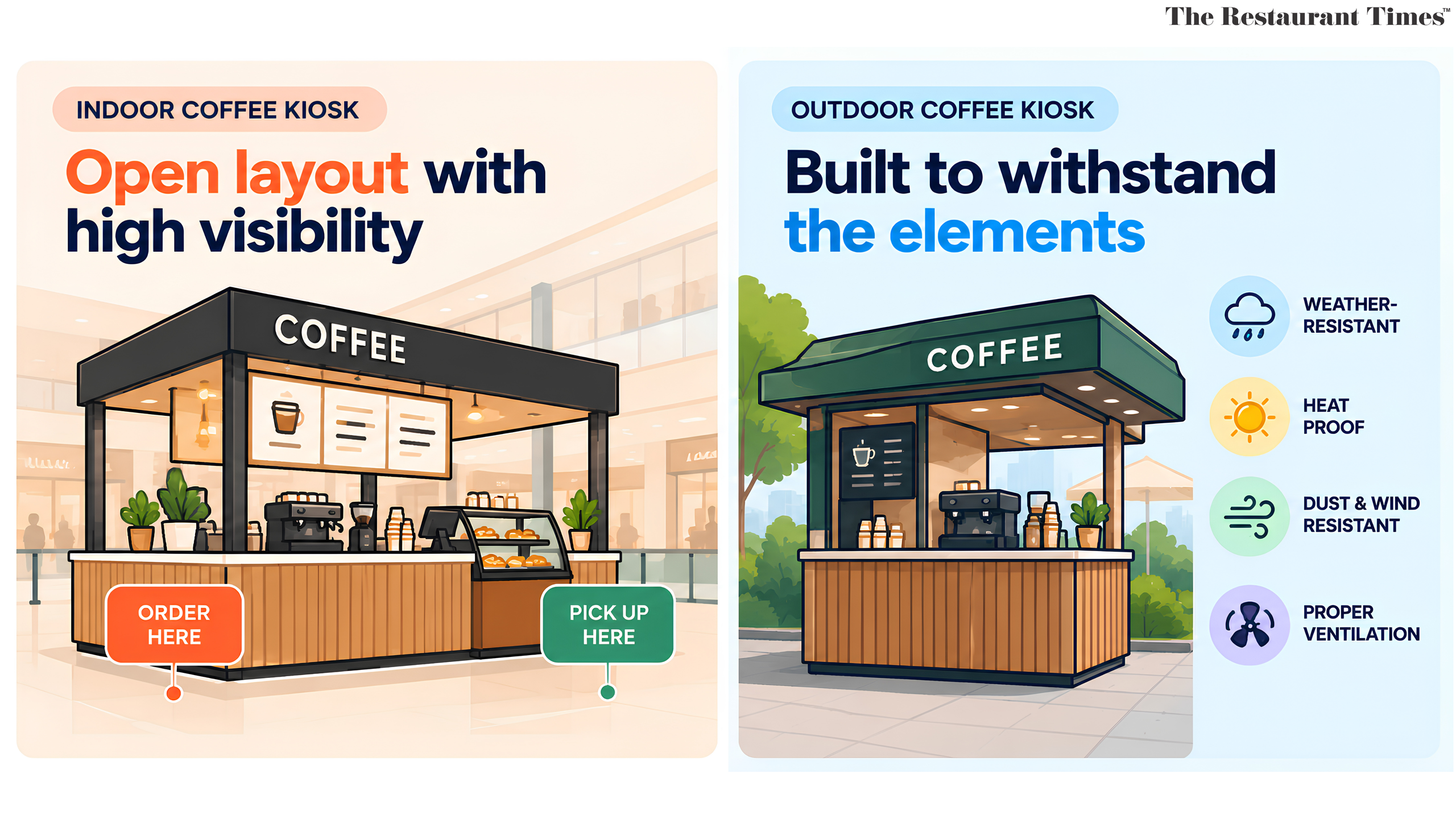
For indoor coffee kiosks, your goal should be to encourage customer interaction. You can do that by going with an open layout and making sure your menu and display are easy to see.
In a shopping mall, make sure the counter is visible from everywhere you expect pedestrians to walk past. Plus, there should be clear signage to tell them you can order coffee from here and pick it up there.
For your outdoor coffee kiosks, because now your equipment is more exposed to heat, rain, wind, etc., try to use weather-resistant materials, durable finishes, protected electrical connections, and appropriate ventilation.
Another option is prefab coffee kiosks. It means you have your kiosk manufactured and customized off-site and delivered ready for installation. But when you buy a kiosk, do confirm what all you’ll get for the quoted price, particularly in terms of plumbing, electrical work, transportation, installation, and permits.
How to Choose the Right Location for Your Coffee Shop Kiosk
Foot traffic is essential to a kiosk’s revenue potential. That’s why before you sign a lease, evaluate the number of people passing the proposed site, their routines, purchasing power, and access to competing cafes.
A useful location assessment should include:
- Customer profile: Identify whether the area attracts commuters, students, office workers, shoppers, tourists, or coffee lovers.
- Peak demand: Observe traffic during morning commutes, lunch breaks, evenings, and weekends.
- Competition: If you can, take a walk around where you intend to set up your kiosk, and study your competitors. How much traffic do they get at different day parts? Do their customer order at the counter or prefer vending machines?
- Occupancy costs: For every location, compare rent, revenue-sharing agreements, deposits, utilities, and maintenance charges you’ll need to bear if you choose to go live with your business there.
- Operating permissions: Confirm that the property owner and relevant authorities permit food and beverage sales.
For example, a shopping mall may look like a good option because it offers predictable foot traffic, but the trade-off is that malls charge substantial rent. Similarly, if you plan to open a street-facing outdoor cafe, indeed it will have lower occupancy costs, but you’ll have to face seasonal demand and weather disruptions.
INDUSTRY INSIGHT
| Right now, the US coffee market is really great for anyone who wants to launch coffee kiosks. For instance, if you look at the data, in 2026, 66% of American adults are drinking coffee every single day. Specialty coffee consumption also rose from 39% in 2020 to 46% in 2025, due to an increase in demand for espresso-based and cold brew beverages among the younger population. Meanwhile, in the coffee industry, there’s also a very obvious rise in adoption of self-service technology and demand for convenient ordering – all of which open up opportunities for compact coffee kiosk concepts in high-traffic areas. |
Licenses, Equipment, and Daily Operations
In the US, coffee kiosks must comply with applicable state and local food safety regulations. The U.S. Food and Drug Administration (FDA) publishes the Food Code as a model for food safety standards, while local health departments oversee retail food permits and inspections. Yes, requirements do vary by location and business operations, so you’d better double-check everything before you go live with your coffee kiosk concept.
As for equipment, choose according to your intended menu and expected demand. Maybe you’d need an espresso machine, a grinder, a refrigerator, and a payment terminal for starters.
Keep your menu laser-focused on popular beverages and a small selection of complementary snack items. A limited menu makes purchasing, preparation, staff training, and inventory management easier.
Don’t forget to monitor daily sales, average transaction value, waste, stockouts, and repeat purchases. These metrics will tell you whether your coffee kiosk business is profitable in the long term or not.
KEY TAKEAWAYS
| – A coffee kiosk is a compact, take-away-focused format that caters to busy commuters. It works amazingly well in limited space, even in busy urban markets, with fewer staff and a much lower startup budget than a traditional coffee shop. – Profitability in a coffee kiosk business is never guaranteed. The key is how well you plan for your location, pricing, equipment cost, and daily routine. – Choose between kiosk models with your budget, your business goals, and your markets in mind: indoor and outdoor coffee kiosks, espresso kiosks, coffee carts, drive-thru kiosks, and franchise kiosks each cater to different customers, and each comes with different features. – Location is equally important for the success of your business. A spot in high-traffic areas, like a busy mall, a commercial street, an outdoor cafe area, or a corporate campus, can make or break a coffee shop kiosk, so compare rent and study the cafes and coffee shops nearby before you commit to a lease. – Coffee kiosk design plays a crucial role in attracting customers. Creating stylish kiosks with clear signage, display shelves, a visible logo, and a few smart, innovative design ideas helps your brand stand out in a crowded mall. Plus, match your materials to the setting and the space. Solid wood counters work well in indoor coffee kiosk design, while an outdoor coffee kiosk needs weather-resistant finishes, protected wiring, and other practical features. – Always, always, always create a business plan before you commit. List your machines, kiosk design, permits, and rent so you can estimate your costs, sales, and profitability. – Technology such as a point-of-sale system and self-service ordering adds convenience, and an efficient, innovative setup with features like mobile ordering helps a small coffee shop format better serve customers during rush hours. – No matter where in the world your kiosk stands, success comes down to numbers at the end of the day. Track which drinks sell best, along with daily sales, cost per cup, average spend, waste, and repeat customers, to see whether your outlet is turning passersby into loyal coffee lovers who pick you over nearby cafes. Keep creating reasons and fresh ideas for them to come back, because a coffee shop lives on repeat business. Know your neighbors. Cafes, coffee shops, vending machines, and independent vendors all compete for the same customers, so study what the cafes around you do well and where your coffee business can stand apart. |
Frequently Asked Questions
1. How much does it cost to start a coffee kiosk?
Well, the actual cost depends on your coffee kiosk design, machines, location, and permits, so there is no single number that fits every coffee kiosk, and prices also vary across markets.
Still, compared with full cafes, a kiosk usually needs less space and fewer staff, so expenses are far lower.
2. Is a coffee kiosk franchise better than opening your own coffee shop or kiosk?
A coffee kiosk franchise gives you an established brand that customers already know, a ready menu, training, and a supply chain, which helps if you are new to the coffee business, and many franchise kiosks rent space in malls and other busy markets, right next to cafes. But the biggest thing you’ll probably be compromising in this setup would be that you’ll have to pay hefty fees, and still you won’t have any say (mostly) on the menu, branding, and setup. You can not be creative at your own will.
An independent kiosk, on the other hand, gives you full control over your brand, but then it requires a lot of work too…you’ll need to find your own suppliers, fix SOPs, market yourself, and more.
The key is to compare each franchise with your budget and the markets you want to serve, focusing on the support you need, because that is what improves your chances of success.
3. What makes a coffee kiosk design stand out in a shopping mall or outdoors?
To make your kiosk design stand out, I’d say play around with your layout first. Install good lighting and a menu display that is easy to read. You can even try to add a small table or a standing ledge for customers who might want to linger for a bit. You can decorate your walls with local art pieces. Many cafes rely on seating, but a kiosk definitely goes big on speed, so keep the counter equipped for fast service.
In malls and street markets, your coffee kiosk design also has to compete with other cafes and the coffee shop next door. An outdoor cafe setup needs weather protection, and solid wood counters need proper sealing outdoors. Promotional materials such as posters, cup sleeves, and a sale sign help customers discover your kiosk and cater to coffee lovers around the world.