
Casual dining is a distinct sector in the United States cuisine industry – dine-in, diverse menu, full-service bar, and prices that are reasonably affordable for Tuesday night dinner. This sector delivered a continuous growth story over many years, created the best-known chains in the world, and was considered a default venue for family dinner, celebration on the birthday, post-work meal, etc.
However, a lot has changed, and to understand how casual dining fits into the current environment, it is important to face both its strengths and weaknesses.
What You Will Learn
- What casual dining restaurants are and how they differ from fast casual and fine dining
- The top casual dining chains in the US and what makes each worth visiting
- Why casual dining chains are facing tough times, and which brands are thriving
- What to expect as a diner and how to find the best casual dining options near you
What Is Casual Dining?
Casual dining restaurants are full-service eateries offering moderately priced food in a relaxed atmosphere, bridging the gap between fast food and fine dining. Casual dining restaurants feature table service, diverse menus, and familiar settings suitable for families or groups, typically without strict dress codes or reservation requirements. Casual dining features professional but informal service with comfortable seating, often characterized by themed decor.
Check out America’s Favorite casual dining restaurants to understand better:
Key Features of Casual Dining Restaurants
Casual dining restaurants charge medium prices that are higher than fast food prices but are way lower than fine dining restaurant prices. Casual dining menus feature a variety of dishes and serve a large number of people. Such restaurants normally offer full table service, full bar facilities, or at least a selection of beers and wines along with menus featuring a wide array of appetizers, salads, sandwiches, burgers, steaks, chicken, fish,h and other desserts. Diners spend a lot of time eating meals that take about 45 minutes to one hour or even more.
Casual Dining vs. Fast Casual vs. Fine Dining
Casual dining is less expensive and more convenient than fine dining, which concentrates on extravagance and service. Casual dining offers table service, better quality food, and a more relaxed pace than fast food, which stresses speed and restricted menu choices. The major difference from fast casual is that of the service mode; in casual dining, food is served at the table, while in fast casual, the customers order their food from the counter. This makes all the difference between the two in terms of costs and customer experience.
INDUSTRY INSIGHT
| 66% of Americans visit a casual dining restaurant at least once per month. Of the 66% of monthly restaurant customers, 51% spend at least $100 eating out each month |
Top Casual Dining Restaurant Chains in the United States
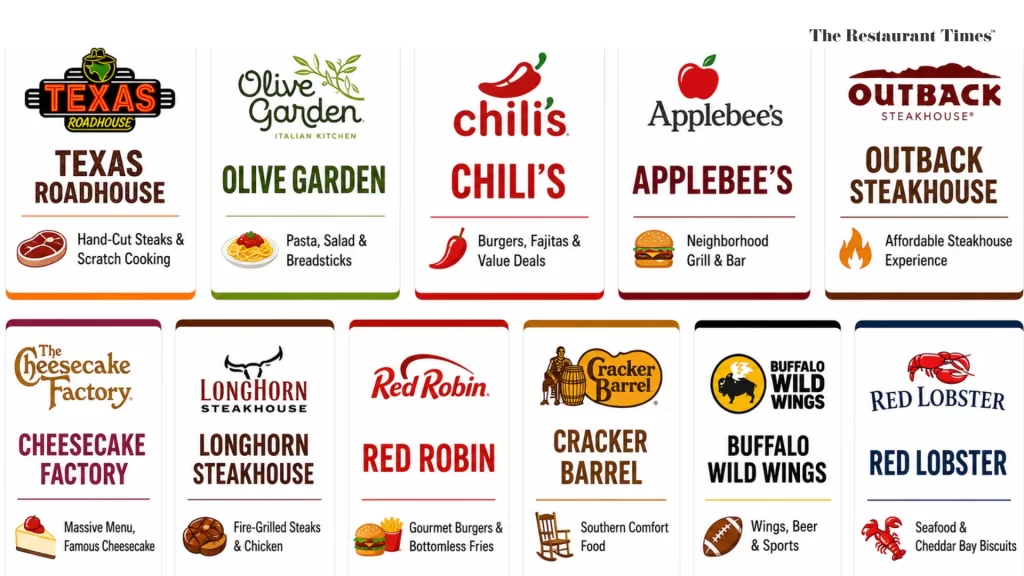
Popular casual dining restaurants in the US include Texas Roadhouse, Olive Garden, Chili’s, and Applebee’s, which offer full-service dining in a relaxed atmosphere. The top 10 casual dining chains in the U.S. include popular names such as Chili’s, Olive Garden, and Texas Roadhouse, reflecting a mix of traditional and contemporary dining experiences.
National Casual Dining Chains
According to a survey conducted by Restaurant Business, Texas Roadhouse is the best casual dining restaurant chain in the United States. Texas Roadhouse achieves success with 90% made-from-scratch food, hand-cut steaks, fresh-baked bread and biscuits, and an average check price of $22. Texas Roadhouse has been rated as the best casual dining restaurant chain in the U.S., which indicates that there has been a change in consumers’ preferences in the casual dining industry.
Olive Garden
The Olive Garden chain restaurant still remains one of the most popular casual chain restaurants in the nation because it offers consumers abundant pasta dishes, breadsticks, and salads at affordable prices. The continuous promotions of never-ending pasta and family-style dining have made it popular in every region of the United States, from Chicago to Florida and even in remote regions of the country.
Chili’s Grill and Bar
Chili’s Grill and Bar is an iconic place where Americans consume burgers, fajitas, ribs, and world-famous fries. It is one of the oldest casual dining restaurant chains and operates on the principle of value. It has recently focused its efforts on menu simplification and value promotions in order to bring customers back to its restaurants.
Applebee’s
Applebee’s is a local grill and bar, which has been entertaining suburban guests for decades with traditional foods such as burgers, sandwiches, chicken, and salad. Similar to the rest of legacy brands, Applebee’s had to introduce various innovations and promotions at its bars to attract the younger generations.
Outback Steakhouse
Outback Steakhouse was known for its spicy flavors, blooming onions, and an Australian-style atmosphere. Outback is a place where steak lovers can enjoy their favorite grill without spending too much money, like in a high-class steakhouse. For example, the main client base of Outback Steakhouse appreciates the brand due to its reliability in terms of quality.
Cheesecake Factory
Cheesecake Factory is unique compared to other casual chains due to its giant menu, which includes hundreds of items ranging from pasta to burgers to Asian-inspired food, all of which is offered together with the famous cheesecakes. Cheesecake Factory is one of those rare chain casual restaurants that have been experiencing good sales for many years.
Longhorn Steakhouse
Longhorn Steakhouse is a grill-oriented casual dining establishment known for its hand-rubbed steaks, fire-grilled chicken, and friendly ambiance. Longhorn Steakhouse has steadily been growing and attracting loyal customers in spite of unfavorable conditions for the entire casual dining segment.
Red Robin
The value proposition of Red Robin includes gourmet burgers and bottomless fries. Red Robin restaurants have been experiencing hard times in sales because the burger market has become highly competitive.
Cracker Barrel
One of the most unusual casual chain restaurants in the USA is Cracker Barrel. This restaurant is a combination of both the restaurant and the country store that serves American-style comfort food, such as Southern food items, breakfast all day long, biscuits, country ham, etc. Cracker Barrel has been attracting many loyal customers all over the country, especially in the Southeastern states.
Buffalo Wild Wings
However, Buffalo Wild Wings made wings and beer synonymous with casual dining through a strategy based on sports, a wide array of sauce options, and an overall bar experience. The game day traffic is high in Buffalo Wild Wings’ restaurants, and the company has managed to maintain itself in the space between sports bars and casual dining.
Red Lobster
Red Lobster restaurant chain has positioned itself as the seafood destination in the U.S., where people go to eat cheddar bay biscuits, lobster, and shrimp on special occasions. Red Lobster has had a hard time of late, as the casual dining chains are currently having a difficult period, and a few of the major chains have gone bankrupt.
Among the ten restaurant chains ranked, Olive Garden leads with the highest net accuracy score at 34.2%, followed by Texas Roadhouse at 28.6% and Applebee’s at 25.1%. Chili’s and Cracker Barrel round out the upper-middle tier with net scores of 23.8% and 22.4%, respectively, while Outback Steakhouse (22.3%) and The Cheesecake Factory (21.9%) post nearly identical results.
Red Lobster comes in at 20.4% net despite a relatively strong 24.3% accuracy rate, due to a higher 3.9% inaccuracy figure. At the bottom of the list, Red Robin posts the lowest inaccuracy rate overall at just 2.0% but also the lowest accuracy rate (19.0%), giving it a 17.0% net score, while Buffalo Wild Wings finishes last with a 15.2% net despite a decent 19.6% accuracy rate, dragged down by the second-highest inaccuracy rate at 4.4%.
Casual Dining Chains Facing Tough Times
Casual dining chains are facing significant challenges, with several well-known brands like Hooters, Red Lobster, TGI Fridays, and Buca di Beppo filing for bankruptcy in the past year as sales decline. Sales at many casual dining chains have declined as consumers are increasingly budget-conscious and opting for cheaper dining options.
Many casual dining restaurants are experiencing decreased sales as consumers are increasingly turning to cheaper dining options due to budget constraints. The casual dining sector is struggling to maintain customer loyalty as diners shift their preferences towards fast-casual and quick-service restaurants, which offer more affordable and convenient options.
What to Expect at Casual Dining Restaurants
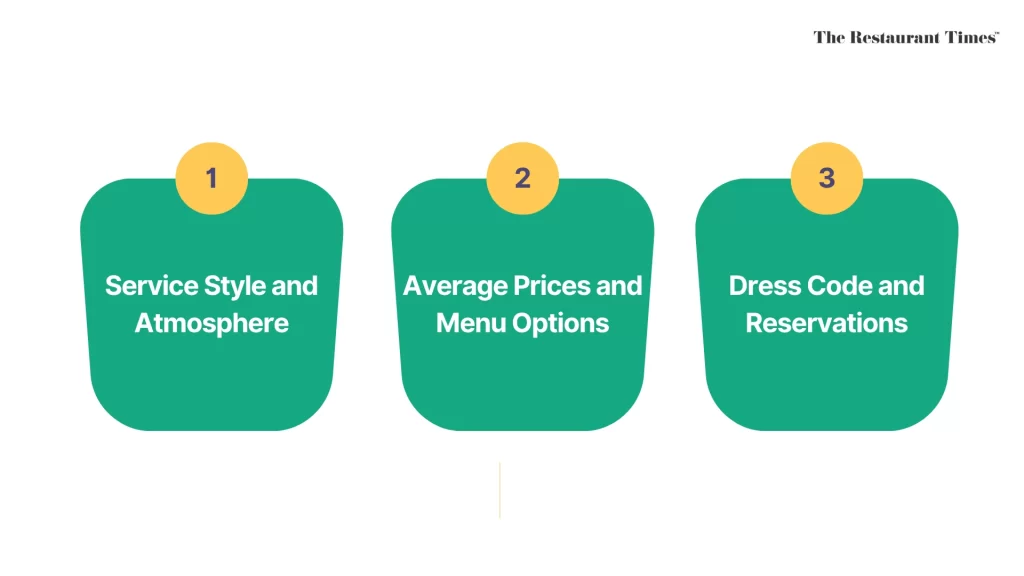
Before entering this sector, it is important to know what to expect here:
EXPERT INSIGHT
| “The U.S. casual dining landscape remains highly competitive. In the past 90 days, no chain has served more than 20% of casual diners, though seven have hosted at least 10%. And while restaurant preferences vary, this report reveals that casual diners prioritize cleanliness, fast service, and consistently look for value options.”– Nora Hao, Sales Director at YouGov America |
Service Style and Atmosphere
Casual dining consists of professional yet relaxed service, whereby a waiter will take your order, serve you food, and check on you during your meal. Casual dining has an ambiance that is aimed at making customers feel comfortable, including themed decor depending on the brand. Dress codes do not exist here, nor do reservations need to be made.
Average Prices and Menu Options
Most casual dining restaurants will cost you between $12-$25 for the entree, $8-$14 for the appetizers, and $6-$10 for the dessert. Chain restaurants will provide a large selection of food items that include chicken, steaks, burgers, pastas, salads, sandwiches, and seafood, along with a bar. A number of casual dining chain restaurants have now come up with various promotional packages,s such as lunch combos for just $10.
Dress Code and Reservations
There is no need for a dress code in any casual dining establishment. The vast majority of chains don’t ask for reservations and work on a walk-in basis, but on Friday and Saturday nights, popular outlets will make you wait for 20 to 45 minutes. There are plenty of opportunities to make a call-ahead reservation.
Casual Dining Trends and Industry Insights
Casual dining finds itself at a turning point. The winners will be the restaurants putting emphasis on quality of food, drink programs, and the experience of coming in, things that delivery and fast casual just can’t offer. Tech use is expanding, too: Online ordering, QR code menus, tableside payments, and loyalty apps are now expected at nearly all major chains.
Diet-friendly food is becoming an important part of the conversation about what’s served at casual dining restaurants. Virtually every major chain offers healthy food options along with the classics.
KEY TAKEAWAYS
| The casual dining establishments provide full table service, a wide variety of menus, and moderate price ranges in a laid-back environment without a dress code that lies somewhere between fast food and fine dining There are serious problems in the casual dining industry nowadays, as there are bankruptcies of several popular restaurants caused by hard times for the casual dining business Those casual dining brands that succeed in 2026 make their food high-quality, improve their bar,s and create an atmosphere that will justify long meals instead of fast ones |
Frequently Asked Questions
1. What defines a casual dining restaurant?
Casual dining restaurants are full-service eateries offering moderately priced food in a relaxed atmosphere, bridging the gap between fast food and fine dining.
2. Why are casual dining restaurants struggling?
Casual dining chains are facing significant challenges as several well-known brands have filed for bankruptcy in the past year, and sales have declined. The core pressure comes from two directions: fast-casual restaurants offering comparable food quality at lower prices and faster service, and budget constraints driving consumers toward cheaper dining options.
3. What is the profit margin for casual dining restaurants?
Casual dining restaurants typically operate on net profit margins of 4 to 8%.
4. How much does it cost to open a casual dining restaurant?
Opening a casual dining restaurant typically requires $500,000 to $1.5 million or more in total investment, depending on location, market, and concept.
5. What makes a successful casual dining restaurant?
Execution that delivers a genuinely better in-person experience than any alternative at a comparable price.
6. What are the best casual dining restaurants near me?
The best casual dining restaurants near you depend on your location, but the most consistently reliable national chains across the country include Texas Roadhouse, Longhorn Steakhouse, and Cracker Barrel for Southern comfort food and all-day breakfast.