

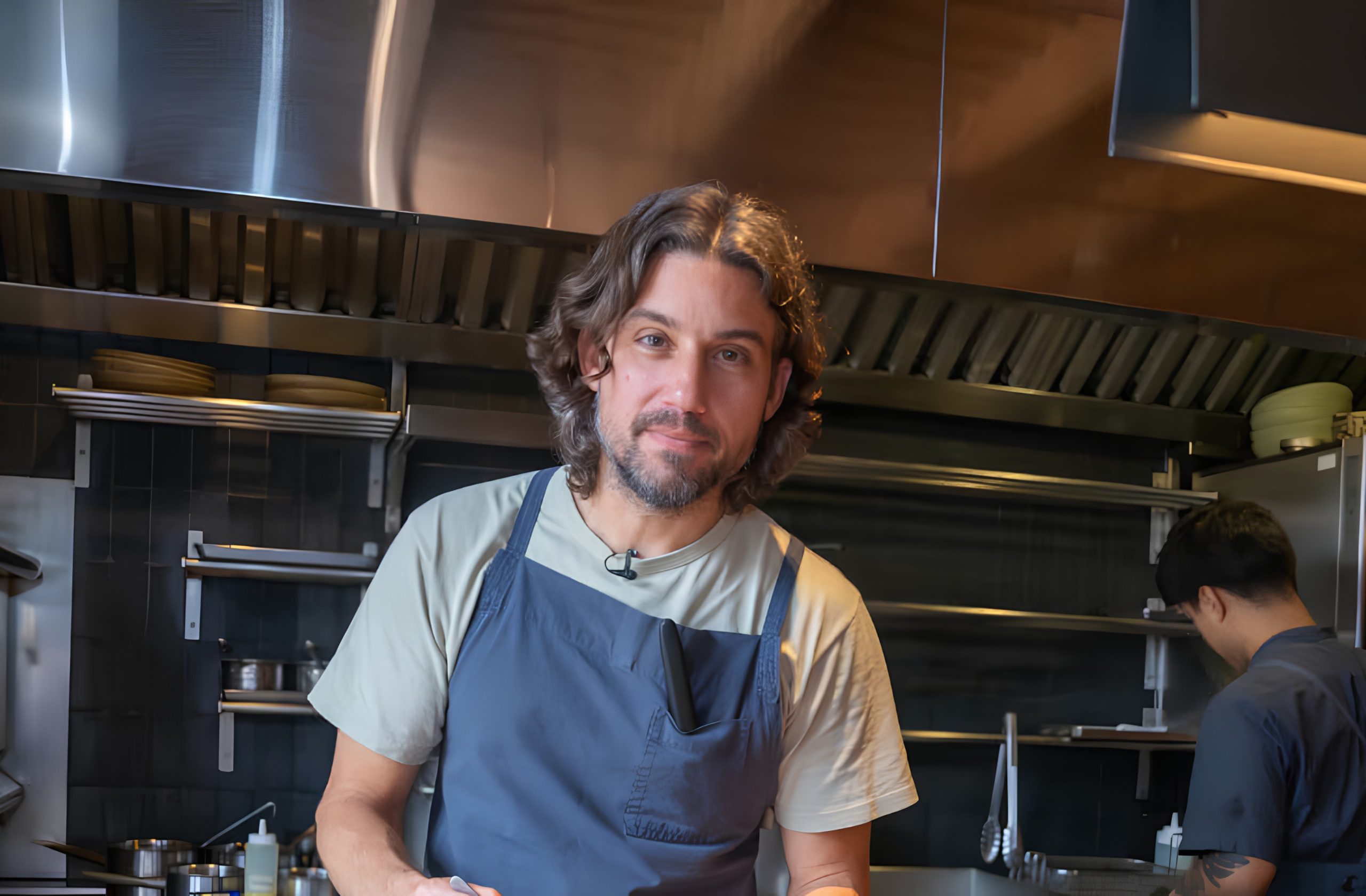

Try to describe Mérito as a Peruvian-Venezuelan fusion whatever…kitchen or restaurant, etc., etc.- and Juan Luis Martínez would be the very first in line to say, “This is not fusion cooking because we’re not reinventing dishes; we’re just searching for flavors that entwine the two cultures.” Meaning, Juan doesn’t take a Peruvian dish and give it a Venezuelan twist, nor the other way around. He is literally working on bringing together the ingredients, flavors, and culinary traditions of both countries to create a third or a new dish.
“We create a connection via the produce of both countries, not via their recipes,” he says, and if you spend even one evening at Mérito, you’re gonna see why it is the whole point.
From Caracas to Central
Martínez was born in Caracas and trained at La Casserole du Chef. Throughout his twenties, he moved from one country to another – studying and taking on jobs in kitchens. He worked in Spain, then Paris, then Bordeaux and Madrid, and picked up so many cooking techniques along the way.
The turning point, however, came in 2013, at a conference in Madrid, where he watched Virgilio Martínez speak about Peruvian cuisine and its renewed appreciation for Andean produce.
“When I saw Virgilio Martínez at Madrid Fusión, I was surprised by the refinement and discussion about haute cuisine in Peru, much of which was based on a renewed appreciation for Andean produce,” he said.
And a few days later, he was working at Central.
It was this job that gave Martínez a reason to finally stay in Peru. He arrived in the country in 2014, before the wave of Venezuelan migration, and before the political and economic crisis back home pushed millions of Venezuelans to leave.
“I had the support of my family, and I wanted to cook in other places,” he explained. “That I’m from another country hasn’t made it easier or harder; it was as difficult as setting up a restaurant of this kind anywhere; you have to carve out your own place, earn respect, create a community of frequent diners.”
Choosing Barranco
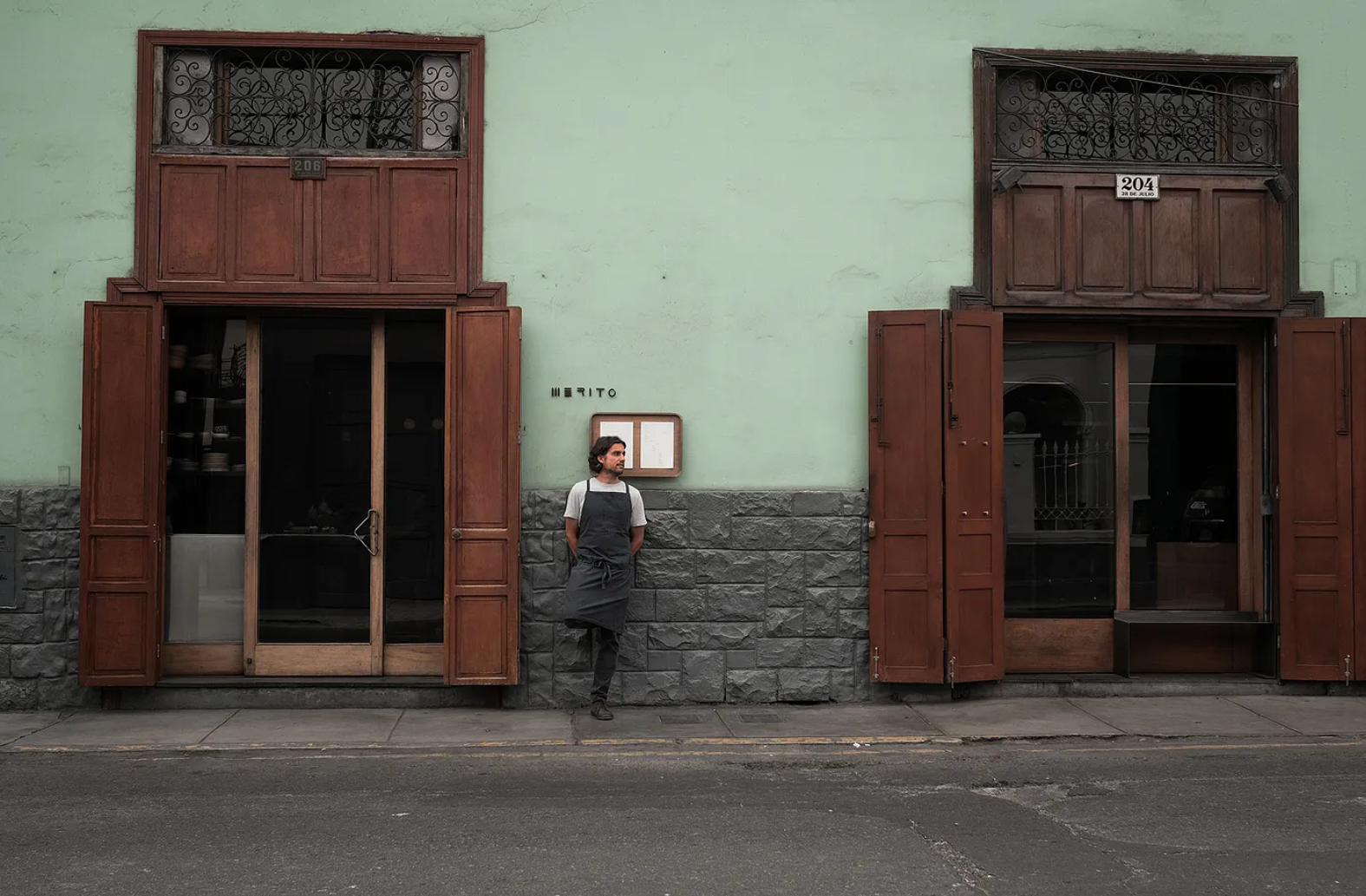
In 2018, together with José Saume, a friend he had met years earlier while working in a kitchen in Caracas, Martínez opened Mérito in Barranco, which is a very artsy, ocean-close neighborhood of Lima.
He picked Barranco over the more obvious tourist draw of Cuzco because it matched what he wanted the restaurant to feel like. The building still has its original adobe brick walls, left uncovered on purpose. Every piece of furniture here is clean, with simple lines, very Japanese in a way that makes you super relaxed on the spot.
The kitchen is right at the entrance, open and loud with heat, and the counter seats put guests close enough to feel it. “I privilege the comfort of our guests,” Martínez said. “With physical proximity, we can establish a rapport with them.”
“Produce, Not Recipes”
Venezuelan and Peruvian cooking already share a foundation. Both have garlic, onion, and ají in their dishes, even if the ají itself changes character crossing the border, i.e., it is sweet in Venezuela and hot in Peru.
Still, rather than forcing all the ingredients into new dishes, Martínez looks for the produce that already speaks both languages, then lets the kitchen do the rest.
For example, when he wants to impart to the dish a taste of lime, something acidic, he uses cold-pressed sachatomate. For sugar, he has Yacón root.
He talks about the restaurant almost the way you would talk about a person finding their footing.
“Living in different places has taught me to be receptive to people’s sensitivities,” he said. “Listening to a voice in your heart that tells you how to be present. I think I created something that speaks to the self.”
Through each dish he plates, “what I express is my appreciation for different cultures, history, and traditions,” he said. “I cook something that people can relate to. For me, learning to cook helped me understand my own culture.”
Rethinking the Tasting Menu
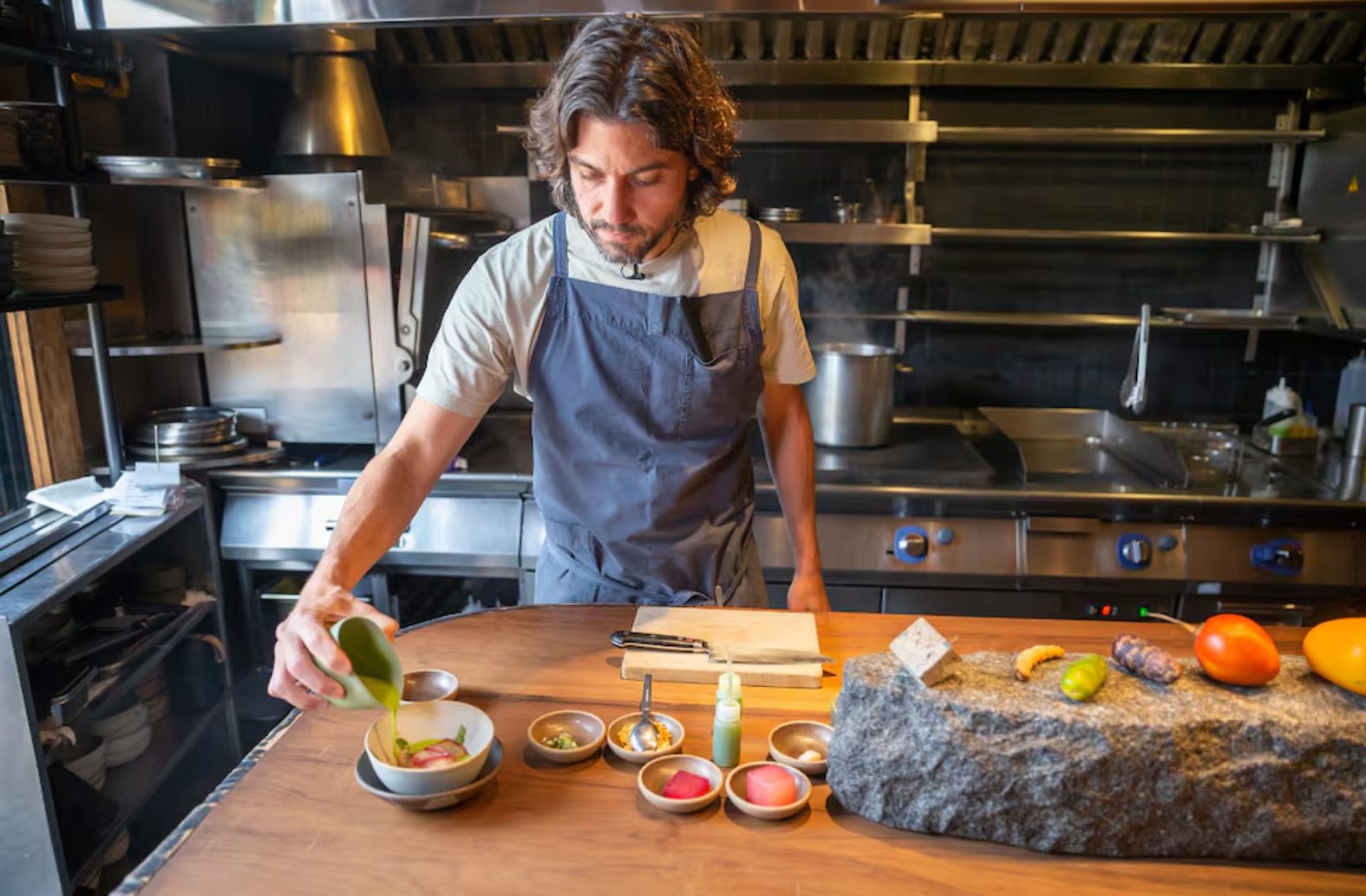
Mérito’s tasting menu (you may find it really surprising), but Martínez did not like it right away.
He has strong opinions about tasting menus in general, and not all of them are kind. He believes the format is not dead, but that it died in the version most restaurants still serve up, heavy on theatre and spectacle.
Mérito’s menu pushes the other way, built around small plates and a pace that keeps the table talking. He thinks about the meal in terms of time rather than a fixed course count. Two hours, he says, is the ceiling, the point where a body starts to feel weighed down, “like in a movie that is too long.”
On the tasting menu, there is one dish called “Casi un tomate,” a lacto-fermented tree tomato. Another, “Casi choclo,” is a smoked corn brioche served with jora butter and burnt onion. Underneath both of these dishes, and all the others there are, is what Martínez calls a ground foot, his own term for the anchor of familiarity a dish needs no matter how far it travels from the expected. This means even the strangest plate on the menu has to be recognizable at the end of the day.
What the Name Means
The name, Mérito, means merit in Spanish. It was chosen to reflect the team behind the food, not the chef alone. “It is no coincidence that the restaurant is called Mérito,” Martínez said. “Everyone here is part of who we are, from who washes the dishes to those who design the space. We live each award as a team.”
He is quick to point out that Mérito keeps a deliberate balance of Peruvian and Venezuelan staff, and that the two groups have worked through the tension and pressure of the migration crisis together, as colleagues. “We aim to keep things simple and candid,” he said. “Being able to speak is important.”
That team-first mindset carried the restaurant through its hardest stretch, when the pandemic shut its doors entirely.
Delivery forced Martínez to rethink dishes because “not everything can be delivered, nor have some dishes been devised to be transported in a box because they’ll become something else,” he said.
Out of that scramble came DEMO, named after the demo cassettes bands used to send to producers. This was how what started as easy-to-pick-up items like sandwiches grew into a full bakery and café inspired by French baking, and it has since expanded into a larger space with its own pizzeria attached. A second, more relaxed restaurant called Clon followed next, taking some of Mérito’s most iconic dishes, flan included, and giving them a looser, more casual home.
Recognition Without the Noise
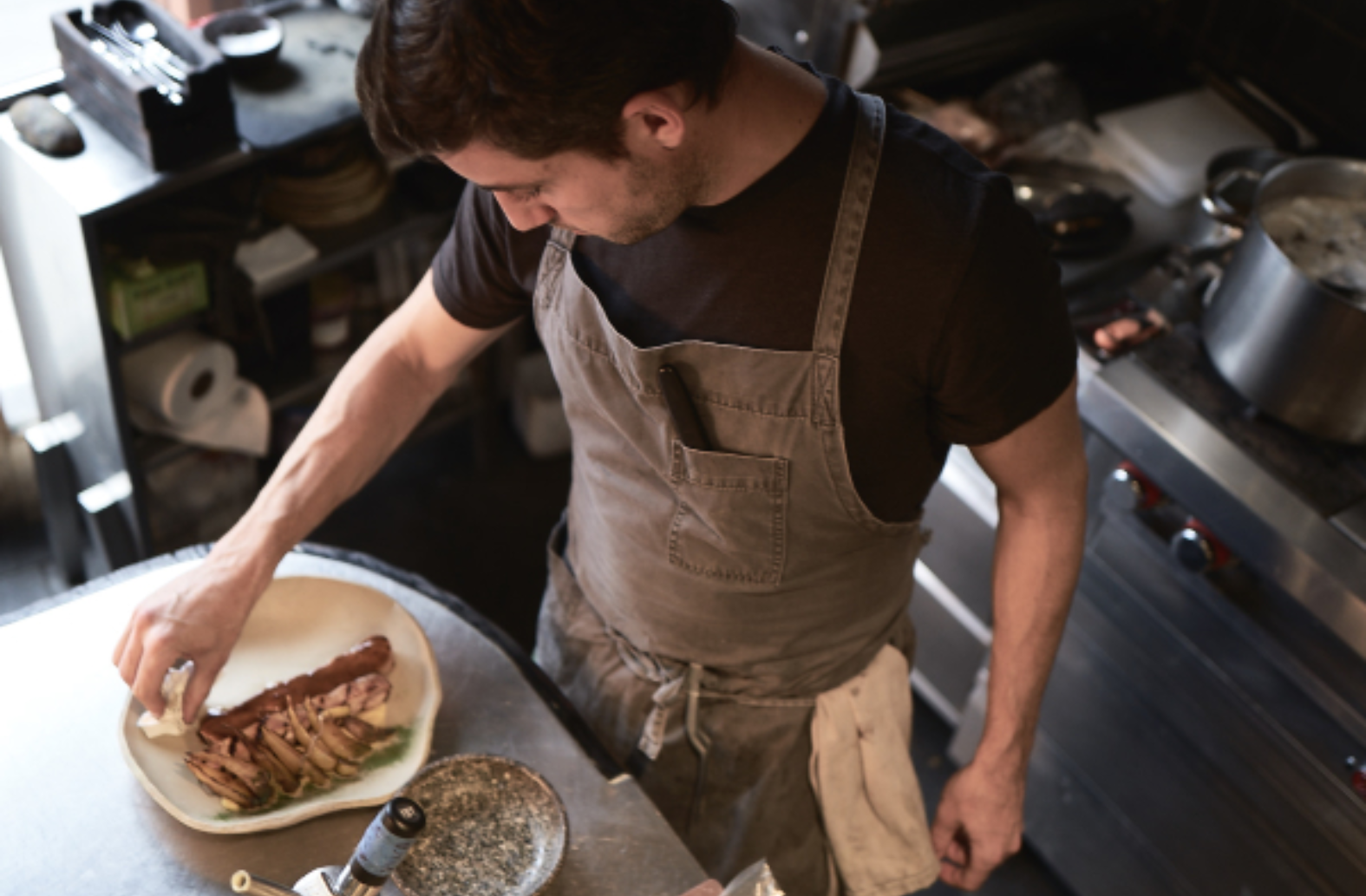
Mérito’s USPs have not gone unnoticed. The restaurant has climbed into the top tier of Latin America’s 50 Best Restaurants list and cracked the global top 50.
2024 Food & Wine’s Global Tastemakers awards named it the best restaurant in the world based on voter experiences over the previous year.
What makes these recognitions notable is how little Mérito has chased them. The restaurant has never relied on settling at a flashy location, a super-active social media presence, or constant guest chef appearances and conferences. It has stayed a narrow, two-level space with wood and exposed adobe, run by people who would rather be in the kitchen than on a stage.
As for what comes next, Martínez says that he “hopes to always find the point of balance. That what we do here nourishes the other concepts, that the gears flow.”
For a chef who spent his twenties moving from country to country, city to city, kitchen to kitchen, “search,” he usually talks about, feels like the real throughline of his career.
“Here I feel complete,” he said. “Here I can express myself. And that, in the end, is what matters most.”


