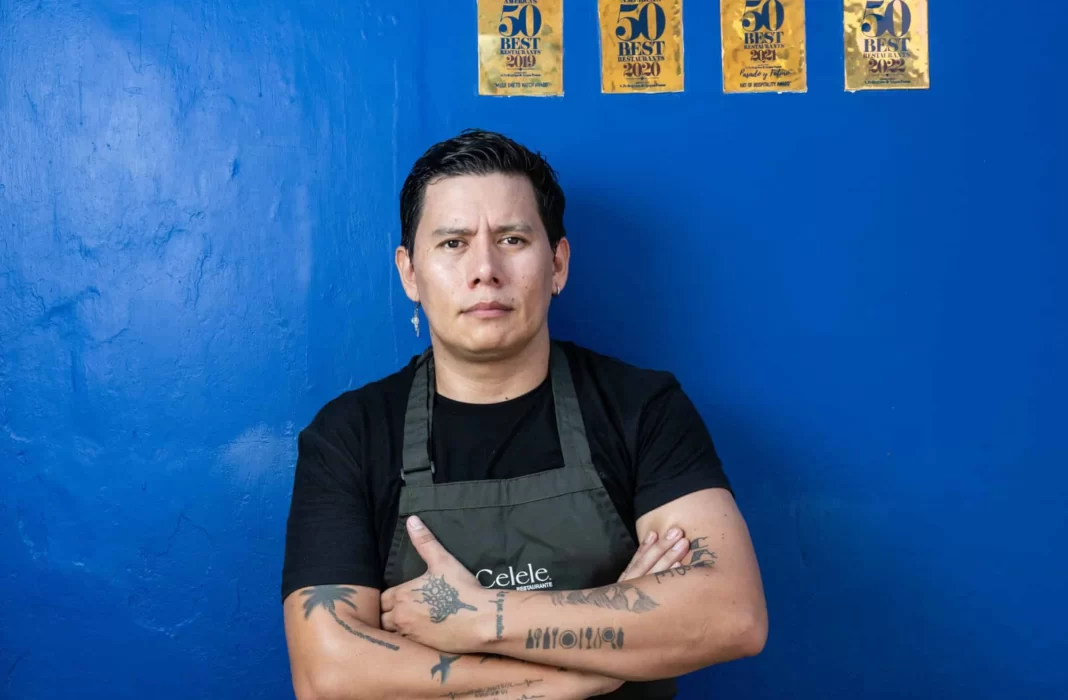

In Cartagena’s Getsemaní neighborhood, chef Jaime Rodríguez spent two and a half years walking through jungles and fish markets before he opened Celele.
Today Celele is the only Colombian restaurant on The World’s 50 Best Restaurants list.
As for the owner himself, Jaime David Rodríguez grew up in Boyacá, a mountain region in central Colombia. His mother used to run a bakery and events space. His father grew watermelon and yuca. Basically, food was what his family did.
Jaime trained with chef Luis Forero at La Fontana in Bogotá. Later he joined the team of Jorge Rausch, a well-known Colombian chef, first in Panama and then in Cartagena.
In Cartagena, “I was like a kid in a candy store,” Rodríguez said. “It’s an incredibly diverse region in terms of climate, landscape and ingredients, and there was this real element of surprise every time I came across something new.”
Quitting Job to Go Research a Region
While working at Hotel El Gobernador in Cartagena, Rodríguez started cooking traditional Caribbean food on the hotel’s patio, just to understand it better. He knew he wanted to open his own restaurant in the future too. But first, he said, he had to do the research.
“I’d go to the Bazurto Market and see all these incredible ingredients, but none of the restaurants in Cartagena were using them,” he said.
So he quit his job.
To pay his bills, he ran secret dinners in Cartagena, cooking tasting menus for strangers who booked a seat through social media. He also picked up some consulting work. With that money, he traveled to places like Barranquilla and Santa Marta, meeting small farmers, fishermen, cooks, marine biologists, and historians. He posted what he learned on Instagram as he went.
“It was all very organic,” he said. “We had a very low budget but a huge desire to learn.”
People soon started to notice. He got invited to give talks at universities and do pop-ups at restaurants in Bogotá.
The whole research period, traveling, cooking, and learning, lasted two and a half years, and what came out of it was Proyecto Caribe Lab. It still runs today, and feeds everything Celele does.
In 2018, Celele opened its doors in a small blue house in Getsemaní, Cartagena.
Why Celele Doesn’t Offer a Tasting Menu
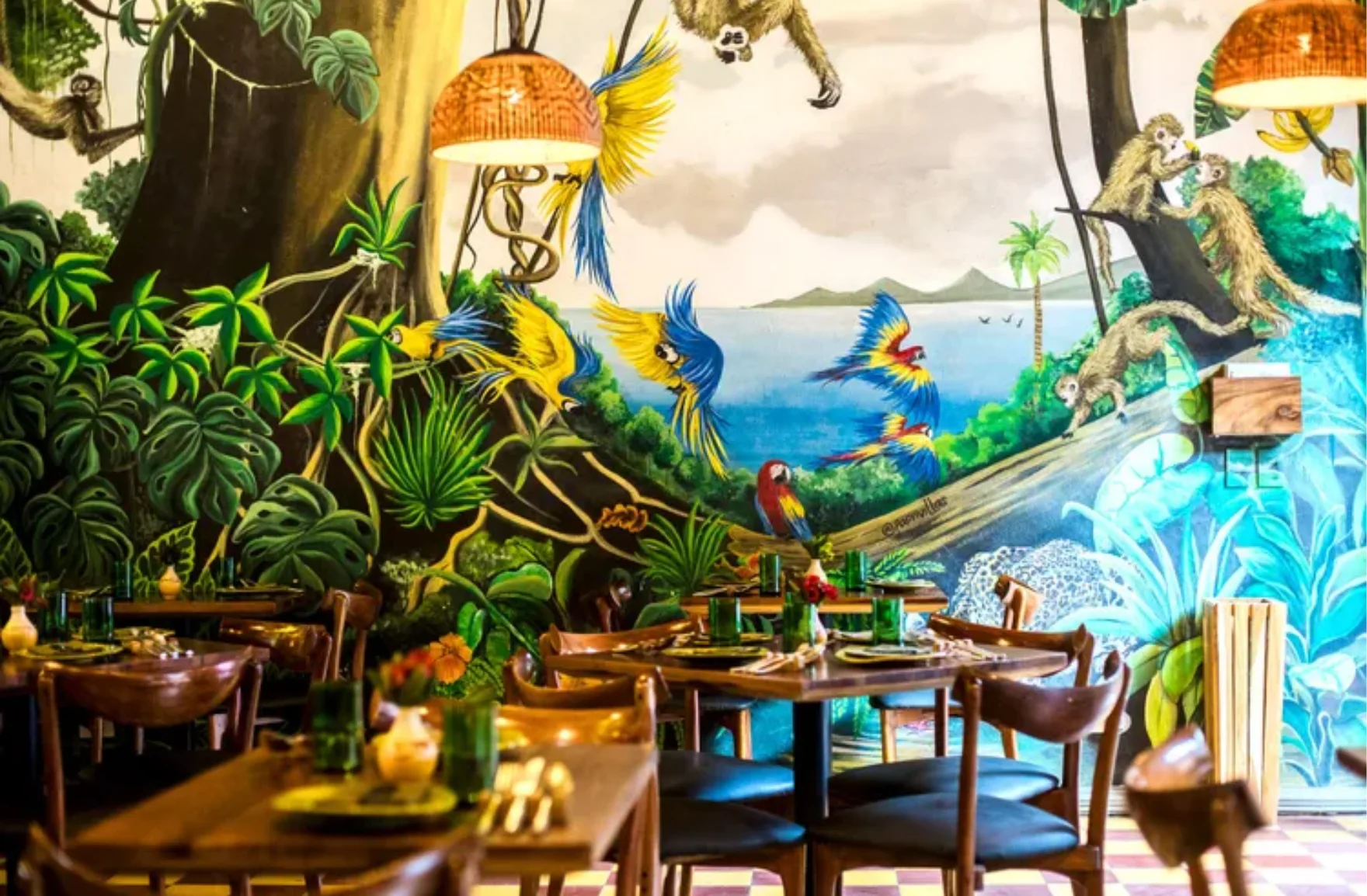
Celele chose to serve à la carte, and that was a very deliberate choice.
“A tasting menu can be prohibitively expensive for people, and I wanted diners from all over Colombia as well as foreign tourists to be able to afford to eat at Celele,” Rodríguez said.
Going a la carte, he added, also lets the restaurant buy biodiverse ingredients in larger quantities, which means a bigger impact on the producers they buy from.
Most of the dishes here lean on ingredients most diners have never heard of.
Take orejero, for example, a seed that comes from tall trees in Colombia’s tropical dry forest. Its name comes from its ear shape, “oreja” meaning ear in Spanish. Its seeds are super rich in protein.
“We use the whole versatile fruit,” Rodríguez said. “We’ve used it to create a vegan demi-glace in an aubergine dish and an ice cream with a subtle cacao flavor.”
The orejero tree wasn’t valued as much before Rodríguez started working with it. Local communities were cutting the trees down for wood, a single payout. Working with Celele changed that math.
“We’ve also had chefs from all over the Caribbean visit us and realize they’re surrounded by these trees too, so we’ve started a bit of a trend throughout Central America,” he said.
Absolutely Nothing Goes to Waste
Rodríguez calls his approach “seed to shell.” The idea is that every part of an ingredient can be used for something.
“For me, every part of a product can serve some kind of purpose,” he said. “We use peels, shells, and skins to make dyes, which helps reduce waste. We also don’t serve fish fillets, as there’s so much waste.”
Instead of fillets, the kitchen makes dishes like salpicón de pescado, which stretches the fish further. Rodríguez said the Caribbean coast has a huge variety of fish species, but not a large supply of any single one, so wasting parts of it doesn’t make sense.
As for where the ingredients actually come from, Rodríguez confirmed that close to 90% of Celele’s ingredients come from Colombia, most of it wild-harvested. Around 60% to 70% are wild-harvested products, about 30% farmed using more sustainable methods, and a small remainder, around 10%, does get imported.
“I can’t say that we don’t import anything,” he said.
The People Behind the Ingredients
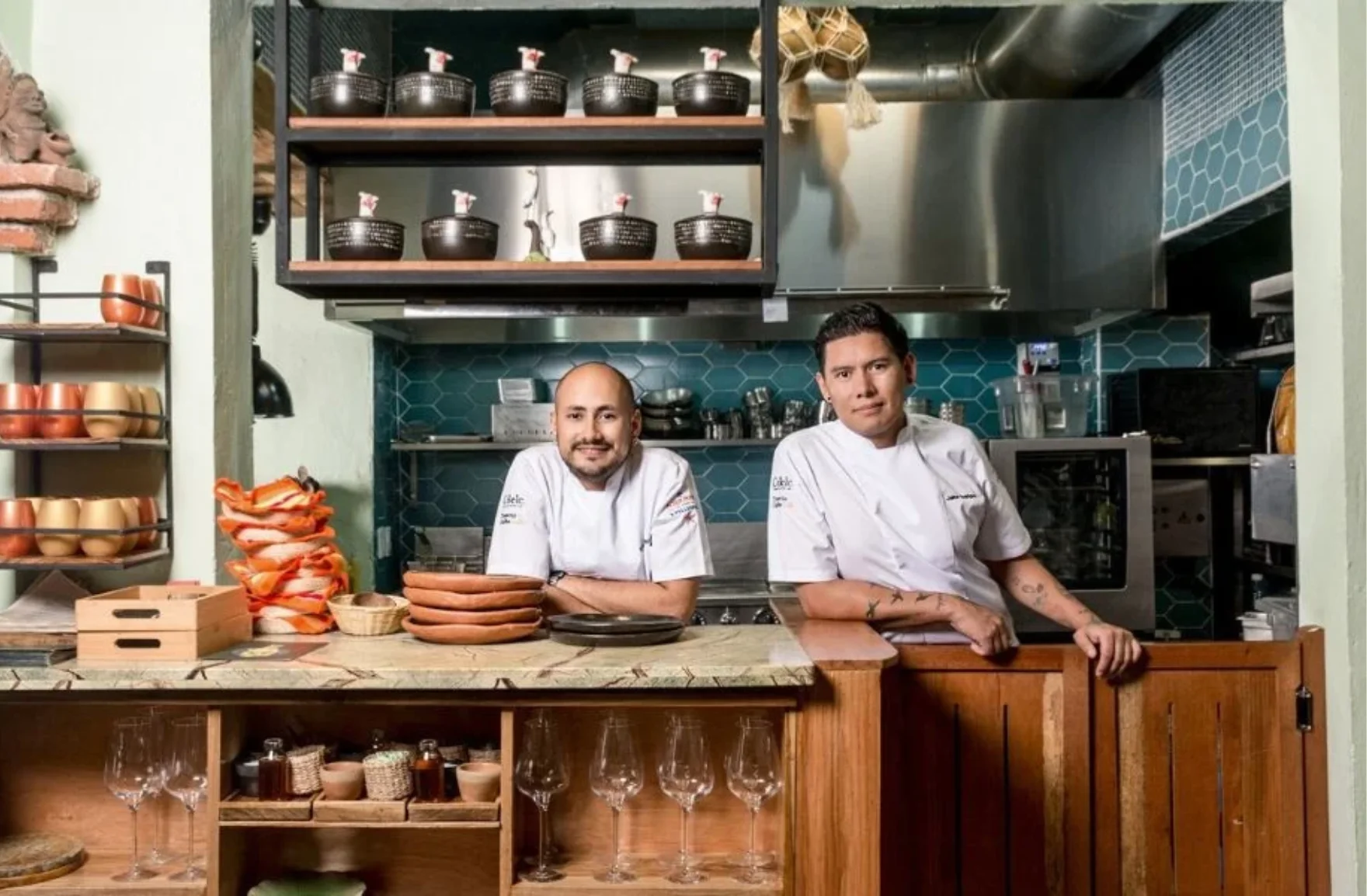
Celele works directly with small producers rather than going through middlemen.
One of their partners is Asocoman, an association of more than 40 families in Montes de María.
The restaurant also works with producers in La Guajira and with a project called Granitos de Paz, which turns “unused outdoor space” in working-class neighborhoods of Cartagena into gardens.
“When I first met them 10 years ago, they were growing things like basil, coriander and various types of lettuce, but we suggested they start producing local ingredients like moringa and verdolaga, both of which have lots of nutritional benefits,” Rodríguez said of Granitos de Paz. “They’ve really grown over the last 10 years and become an even more interesting project.”
He’s also been shaped by time spent with the Wayuu indigenous people in La Guajira.
“Sharing and living together with the Wayuu indigenous people of the Guajira in the Colombian Caribbean has been one of the most important experiences of his journey,” he said. “It has made me see the value of indigenous communities, which strengthen from their origins to safeguard ancestral knowledge that has been on the verge of being lost.”
For his staff too, Celele has issued loans to long-serving employees who want to improve their living conditions, and growing reservations have let the restaurant hire more people.
“I think sustainability and your team’s wellness go hand in hand,” Rodríguez said.
A Dessert Named After a Flower in a Glass of Water
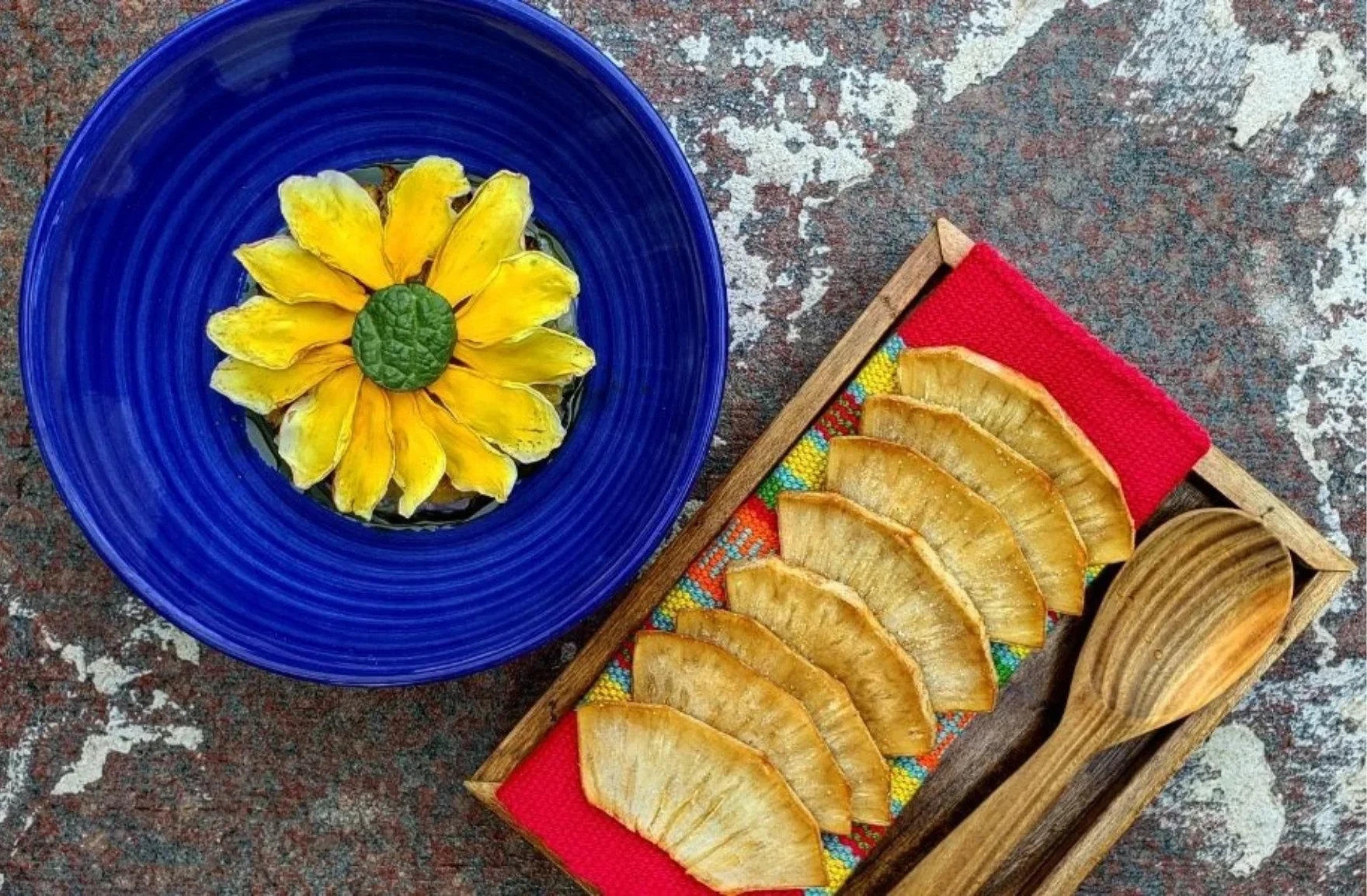
On one of his research trips, Rodríguez saw a cluster of ylang-ylang flowers in a plain glass of water. The woman he met there called it “the love flower.” She told him she used the scented water to spritz clothes and bed linens. Rodríguez made it into one of the most personal dishes on Celele’s menu.
“People who come from more rural areas, they come to the restaurant and try this dessert, and they tell me it reminds them of their childhood,” Rodríguez said. “Their mother would do the same thing. This is what Celele is all about.”
The dish is now a coconut sorbet infused with ylang-ylang, served inside a bright green grapefruit and topped with edible flowers. It’s also a tribute to his own mother, who taught him the pastry techniques that started his career.
Other dishes too carry their own stories. A featherlight, naturally fermented coconut bread called the journey cake, for example, nods to trips he took to the islands of San Andrés and Santa Catalina, where Afro-Colombian women once baked coconut breads for husbands heading out to fish or farm. There’s just so much here…and each is worth a genuine article of its own.
Awards & Recognition
In 2019, Celele won the Miele One to Watch Award from Latin America’s 50 Best Restaurants. It landed at No. 49 on that list in 2020, then climbed to No. 19 in 2022, No. 16 in 2023, No. 6 in 2024, and No. 5 in 2025.
In 2021, it won the Gin Mare Art of Hospitality Award.
In 2024, Rodríguez was awarded three knives at The Best Chef Awards, along with a special Best Chef Terroir distinction.
In 2025, Celele became the only Colombian restaurant on The World’s 50 Best Restaurants list, landing at No. 48, and won the Sustainable Restaurant Award.
But even with all this recognition, Rodríguez said it hasn’t changed how he runs the place.
“These recognitions do not change the way we work,” he said. “My focus is to continue taking care of my well-being, that of our team and suppliers, since today many people put aside the most important thing, which is their internal bases to achieve success.”
“Being on Latin America’s 50 Best Restaurants platform and other awards has always been something very important, but it was never a reason for my inspiration to cook,” he said. “I feel that evolution and innovation are part of my DNA.”
Rodríguez names Leonor Espinosa of Leo in Bogotá as one of his biggest influences, along with Virgilio Martinez of Central in Peru, Rodolfo Guzmán of Boragó in Chile, and René Redzepi, particularly his work on Noma Mexico in Tulum.
Interestingly, younger Colombian chefs now point to Rodríguez the same way. “His success is like a beacon for the new generation of Colombian chefs, like me,” said Angélica Ortiz, winner of the 50 Best Restaurants Scholarship 2025. “It shows us that no matter your background, you can build your own restaurant, not only as a personal achievement, but as a tool to help change our country for the better.”
What Comes Next
Next to Celele, Rodríguez is opening Haíto, a small, popular Colombian bistro centered on the recipes he grew up with and the traditional cooking that shaped the country.
“It is a deeply personal project, where I want to pay tribute to the recipes I grew up with and the traditional cuisine that shaped us as a country,” he said.
He also has a project underway in Medellín with the Wake group, where he’ll be a gastronomic partner, plus a separate contemporary bistro concept that, in his words, “will not carry any line.”
How does Rodríguez see himself? In terms of flavor that defines him, he picked sweet and sour, annatto as the ingredient he couldn’t go a day without, and nature as the place that inspires him most.
The first thing he thinks of after finishing a service at Celele, he said, is pride.