


So, there was this incident that happened in a small kitchen on Rue de Varenne in Paris.
One day in 2004, Alain Passard picked up a turnip and asked one of his cooks, “What is it?”
The cook, who was a young Argentinian-Italian named Mauro Caulagreco, answered (rightly so) that it was a turnip. But Alain Passard shook his head. “No,” he told him. “It’s an apple.” Then he turned away and went back to tasting a sauce on the stove.
It was later, after much pondering, that the cook understood what Passard meant. He was supposed to bake it, make it into a compote, put it into a tart, or sweeten the turnip as he would an apple, if he were the pastry chef.
The small kitchen we are talking about here is definitely L’Arpège – and Mauro, who is now running Mirazur, a three-Michelin-star restaurant of his own in the south of France – still tells that turnip story to anyone who asks about his training days at L’Arpège.
The Day Alain Passard Took Meat Off the Menu
Alain Passard grew up watching his grandmother roast meat over an open flame, and maybe so, for the first part of his career, he was known as one of the finest rôtisseurs in France.
L’Arpège earned its third Michelin star in 1996, at the time when its entire menu was built on meat, cooked low and slow – exactly the way his grandmother used to.
Then in 2001, thirty years into his career, he suddenly took most of the meat- and fish-related dishes off the menu.
Almost the entire food industry was confused – like, how could a three-star chef just stop using the very ingredient/or making the dish that made him famous?
But by then, working on his garden, Passard had realized he wanted to give vegetables a serious try, so he rebuilt his kitchen around them.
The transition, of course, was not a night thing that he announced and whoop – everything turned plant-based. Over the years, some white meat and seafood returned to the menu, while Passard continued refining the vegetable-driven cuisine. Slowly, the kitchen reduced its butter orders from 50 kilos a month to 40, then 30, then 15.
Then, finally in July 2025, he made L’Arpège fully vegan, removing butter, cream, cheese and eggs from the kitchen as well. On this, Passard mentions, “I was starting to go around in circles,” he told BeauxArts. He felt he had reached the end of his animal-based cooking and wanted to explore a healthier cuisine, and the overall change took two years of work with his assistants.
“Since 2001, vegetables have reigned supreme at Arpège and the seasons set the tempo for our cuisine,” Passard says. “Nature has written the finest cookbook. We elevate the 100 percent natural vegetables, fruit and herbs from our three gardens in Fillé-sur-Sarthe, Le Bois-Giroult and the Bay of Mont-Saint-Michel.”
Twenty-five years later, L’Arpège still holds all three of its Michelin stars, and in fact, it remains one of the very few three-starred restaurants in the world dedicated entirely to plants.
Three Gardens to Feed One Kitchen
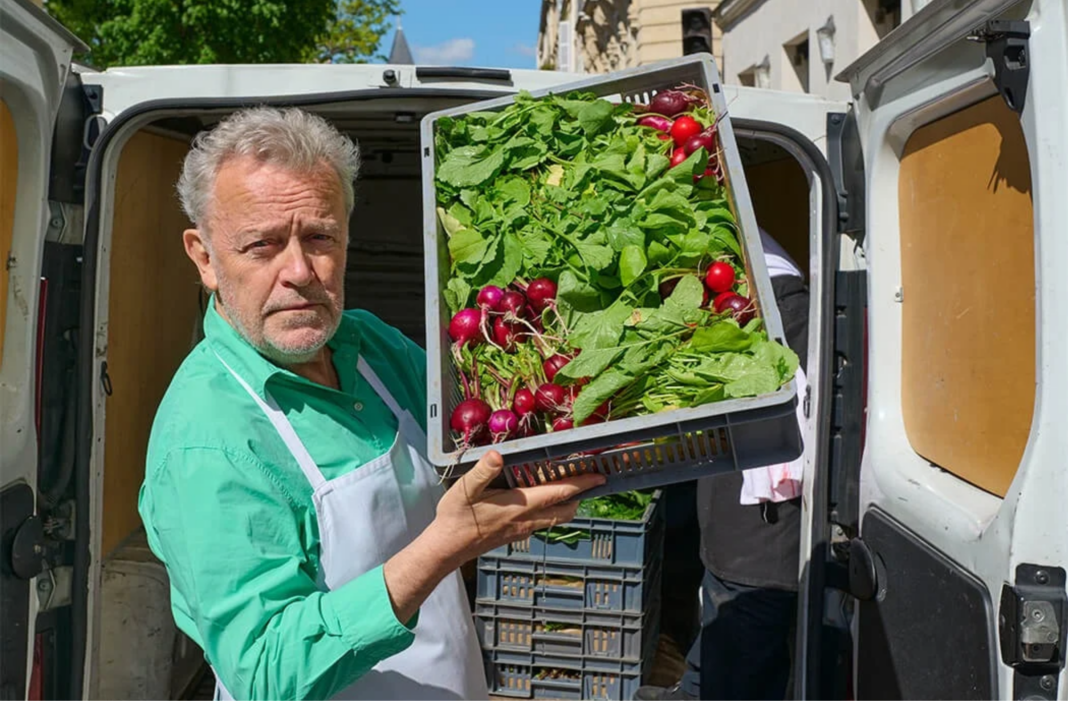
Passard owns three gardens in total, which are spread across the French countryside, including a 3.6-hectare organic plot at a country estate in Normandy with a château that dates back to the twelfth century.
Together, these gardens produce around 30 tons of food a year and grow more than 500 varieties of fruit and vegetables. No pesticides are used, nor is heavy machinery. A team of gardeners literally sows and picks everything by hand.
| “At L’Arpège, every ingredient comes with its own passport and provenance, and we know the experts behind all our products: gardeners, cheese makers, livestock breeders, fishermen, and so on. I love working with people I know and trust.” Alain Passard, Chef & Owner, L’Arpège |
Every morning, the harvest is loaded and driven straight to the restaurant in Paris for that day’s menu.
“I like growing my own vegetables, combining two métiers I love: cook and gardener,” Passard says. “I’ve entrusted my creativity to Nature in these gardens, and it is she who guides my hand.”
A Menu That Changes With the Weather
Because they have their own garden, L’Arpège prepares whatever it has to offer them that morning, which means the menu here is absolutely “not fixed or rigid”
“I don’t cook the same way in summer with an aubergine as I do with a swede in winter,” Passard says. “Every day is a new day for me.”
At L’Arpège, each season – spring, summer, fall, and winter – looks completely different on the plate.
“For me, spring is a rendezvous with a pea, an asparagus, a fava bean, a radish, rhubarb, and a strawberry,” he says. In winter, there’s a different mood altogether. “What a joy it is to quench your thirst, in summer, with a tomato gazpacho with mustard, or a minted cucumber salad,” he says. “And in winter, what a pleasure to warm up with a creamy celeriac gratin, or a leek and potato soup.”
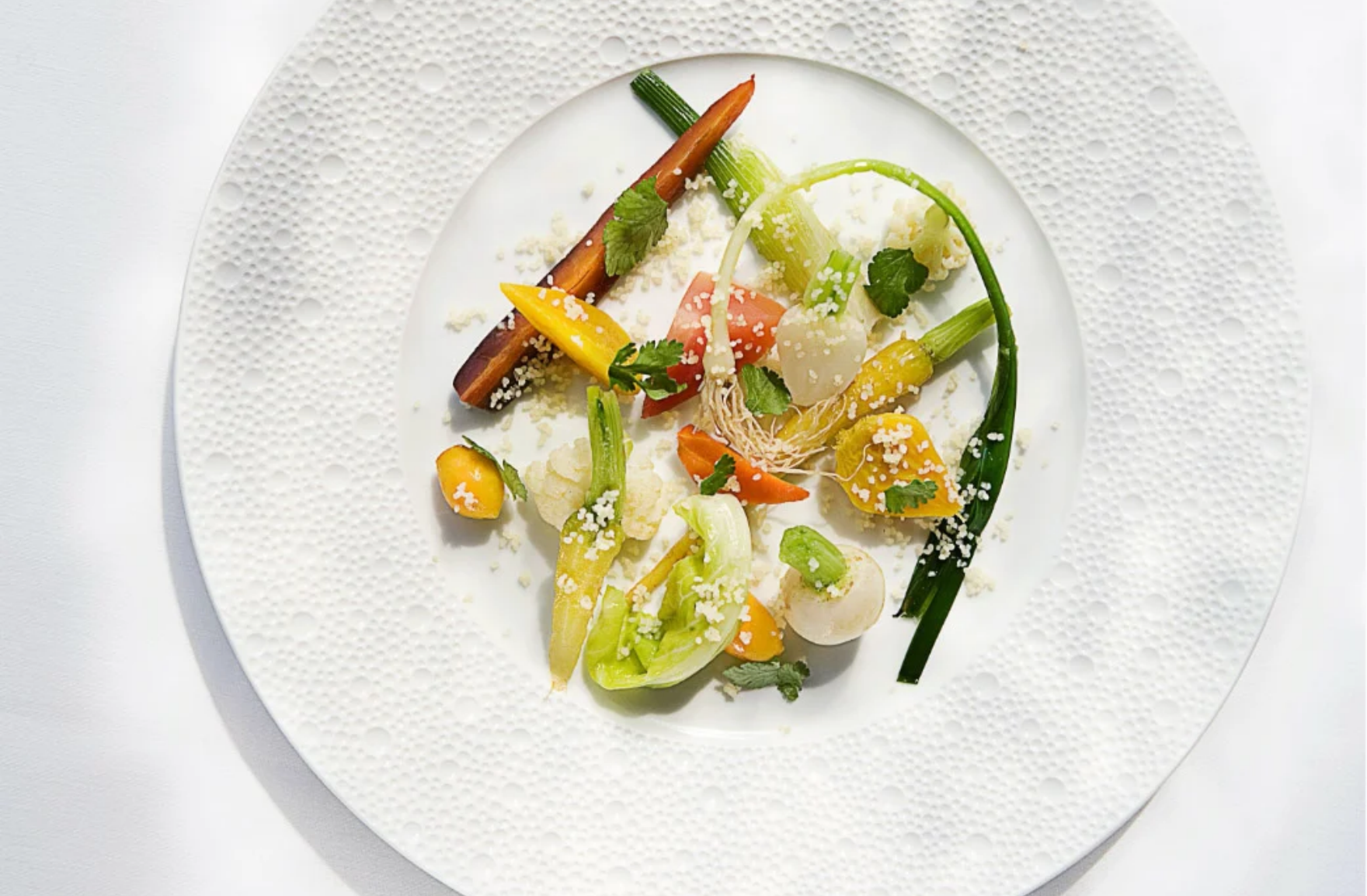
A recent tasting menu at the restaurant, for example, opens with a classic tomato gazpacho finished with lovage cream, served alongside a small plate of raw vegetables so you can taste them in their most natural state before the kitchen makes a full meal out of them. From there comes Passard’s hot and cold egg, a dish he invented two decades ago, made with a warm yolk, cold cream, maple syrup, four-spice, sherry vinegar, and chives. Though the dish sounds super simple, getting the temperature and balance right takes real skill.
As for dessert, Passard’s repertoire includes profiteroles filled with hay ice cream and honey, classic mille-feuille, and tiny apple tarts shaped like roses.
An Artist as Much as a Cook
If you decide to take a short walk from the restaurant, you’ll arrive at what Passard calls his Arrière-Cuisine, which is French for the small room behind a kitchen.
Inside, you will find books, collages, prints, and bronze sculptures, all made by Passard himself.
It is where his other identity lives, the one that treats cooking as a form of art, literally, and that shows on the plate too.
Dishes at L’Arpège are plated with the same care you would expect from a painter choosing colors. The kitchen wants every sense involved, not just taste. You notice it in the way a carpaccio is arranged, or the way a single rose of apple slices is placed on a tiny tart at the end of the meal.
Passard has described this approach as “culinary haute couture.” He has also maintained a long-standing interest in connecting food and visual art.
Beyond L’Arpège
For more than 30 years, L’Arpège Paris has been working around corporate cuisine as well, with the belief that a workday should include real moments of pleasure.
The mission is to offer the most personal experience possible through catering and related services, nourish company culture, and support the well-being of the people eating the food, not just the people paying for it.
Four values anchor that work.
| AUDACITY L’Arpège takes risks and questions established norms rather than settling for what is safe. | PASSION A deep love for the product and focus on taste and quality, carried through in every plate and every service. |
COMMITMENT A responsibility to people and the planet, balancing great food with less waste and a smaller footprint. | REQUIREMENT A promise of excellence carried out by a staff that listens, welcomes, and works with quiet skill. |
Why It Still Matters
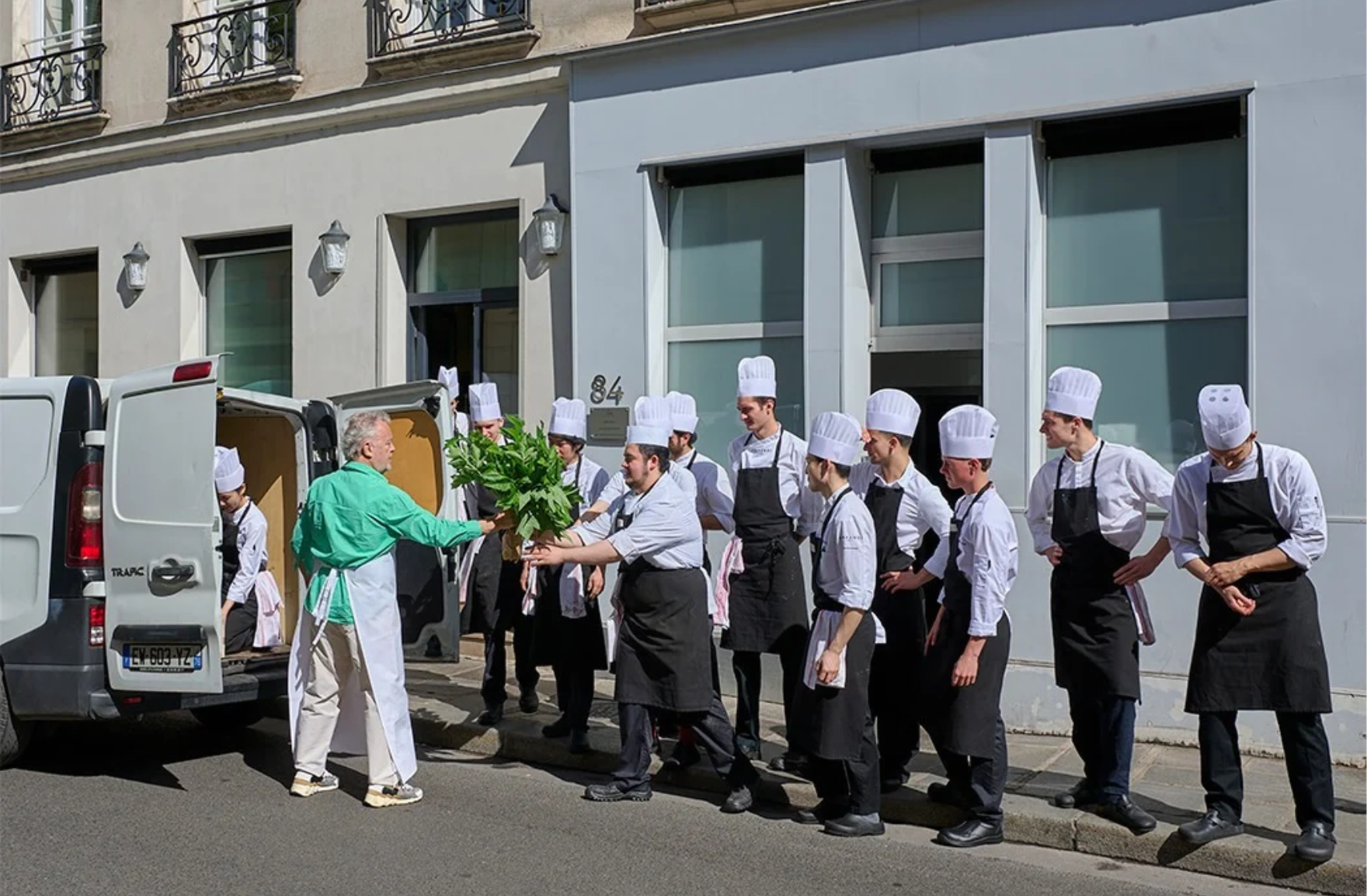
Plenty of chefs talk about respecting their ingredients. Passard actually built a three-star restaurant around that idea and made it work for twenty-five years, and that too at a level that demands a standing ovation from the entirety of the industry.
He took a real risk in 2001, and honestly, it might have failed, but no, it made him one of the most influential chefs of his generation, someone whose former cooks now run some of the best restaurants in the world as well.
What makes L’Arpège worth talking about all the way more is the discipline underneath everything that the team does. Be it their three working gardens, a kitchen that changes with the weather, or the kitchen that is constantly encouraged to improvise. That’s rare in any industry, and in fine dining, it might be one of a kind.


