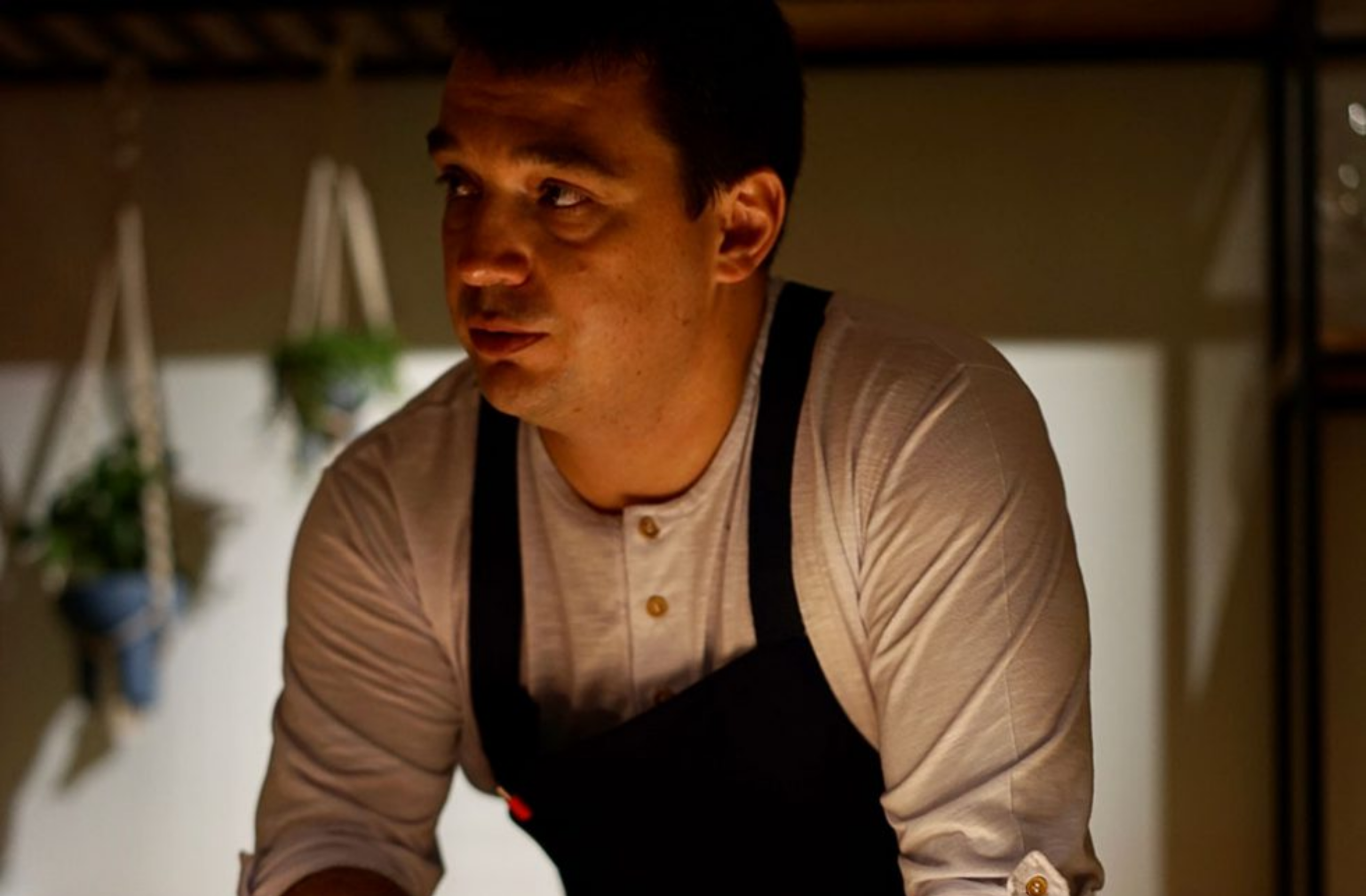

“I love breaded provolone with Worcestershire sauce. And I add diet cappuccino to my breakfast every day. It’s bad, but it’s good.”
That’s Rafa Costa e Silva for you, and yes, I know it’s a really strange way to introduce a chef with two Michelin stars or the man behind very famous Lasai (in Rio de Janeiro) – the man who is very much familiar with his cheese on toast and a bad-for-you coffee habit, but there you go.
If you ever manage to get one of the ten seats at Lasai, you’ll have the chance to see how Costa e Silva cooks – plain, honest, and with a strange, stubborn tenderness for ordinary.
From Wanting to Make an Egg to Becoming Brazil’s Most Celebrated Chef
Costa e Silva grew up in Itanhangá to two lawyers, in what he calls a fairly privileged bubble. He studied business administration in college, but along the way he started sneaking into restaurant kitchens as well.
“I never had any idea of being a cook,” he said. “I just wanted to learn how to make an egg, cut the meat, and that’s it.”
At 23, he left for New York to study at the Culinary Institute of America, staying there far longer than planned. “I lived with my arms burned from pans,” he remembers. “It was frenetic, a very intense cultural learning experience. It was where I learned to be a chef, but what I truly brought back was discipline. I’ve always been a bit disorganized, and the school had a somewhat military vibe. You couldn’t have an unkempt beard or a wrinkled apron.”
From New York, where he also met his future wife, chef and florist Malena Cardiel, he went looking for kitchens on the world’s best restaurant lists. He sent his resume everywhere, including a restaurant in the Basque Country called Mugaritz. It was the first one to answer. “I chose Mugaritz, obviously, to send my resume, but it was a bit of a coincidence, because it was the first restaurant that answered me,” he says. He packed a backpack, expecting a short stay, but ended up staying five years under chef Andoni Aduriz, the man he still calls his mentor.
Aduriz remembers him still. He says: “Rafael is someone with a conviction and attitude toward what he wants to achieve that is rare. And this is accompanied by the fact that he is a very discreet person who doesn’t like to seek attention in a world with so much glamour and shine. That makes him even more interesting.”
Lasai opened in 2014 in Humaitá. Its name comes from a Basque word for “calm” or “tranquil.” Within a year, it had a Michelin star. Today it holds two, sits at the top of Brazil on Latin America’s 50 Best Restaurants list, and made its long-awaited debut on The World’s 50 Best Restaurants list in 2025.
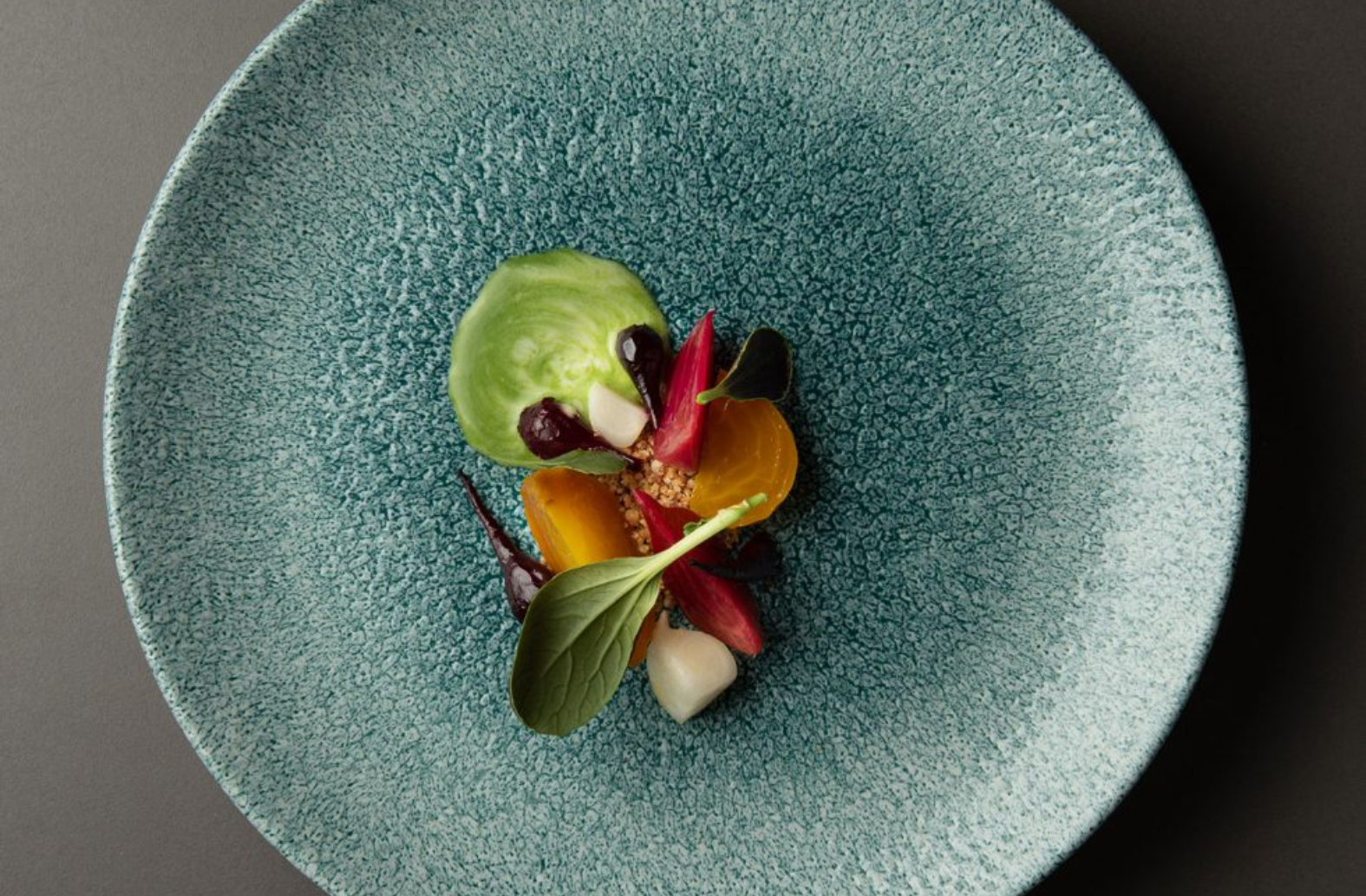
The food here is nothing short of a love letter to a vegetable garden. There are dishes like:
- Chayote squash with romanesco and juicy scallops.
- Palm heart with cashew, enoki, and king oyster mushroom.
- Corn flan with sea urchin and coconut.
And more…”Vegetables showed us that the star of the plate can be as simple as a carrot,” Costa e Silva explains. “You do not need to shave truffles or place a full spoon of caviar everywhere.”
Particularly about Chayote, “it is a food that people are very surprised by,” he says, “because we surprise both the gringo who does not know what we present, and the Brazilian who in general thinks that it is that business that they will not like, bland, tasteless.”
Nearly everything on the menu comes from the two gardens – one in Itanhangá and the other in Vale das Videiras.
“When you’re close to the land, ingredients lead; they are inspiration for our everyday work,” he says. “The menu stops being an idea and becomes a reflection of whatever we find in the garden.”
He denies any label people attach to his food. “Brazilian cuisine isn’t a style, it’s a territory,” he says. “We cook products from our surroundings, carioca cuisine.”
The Man Who Cried in Corners and Learned to Slow Down
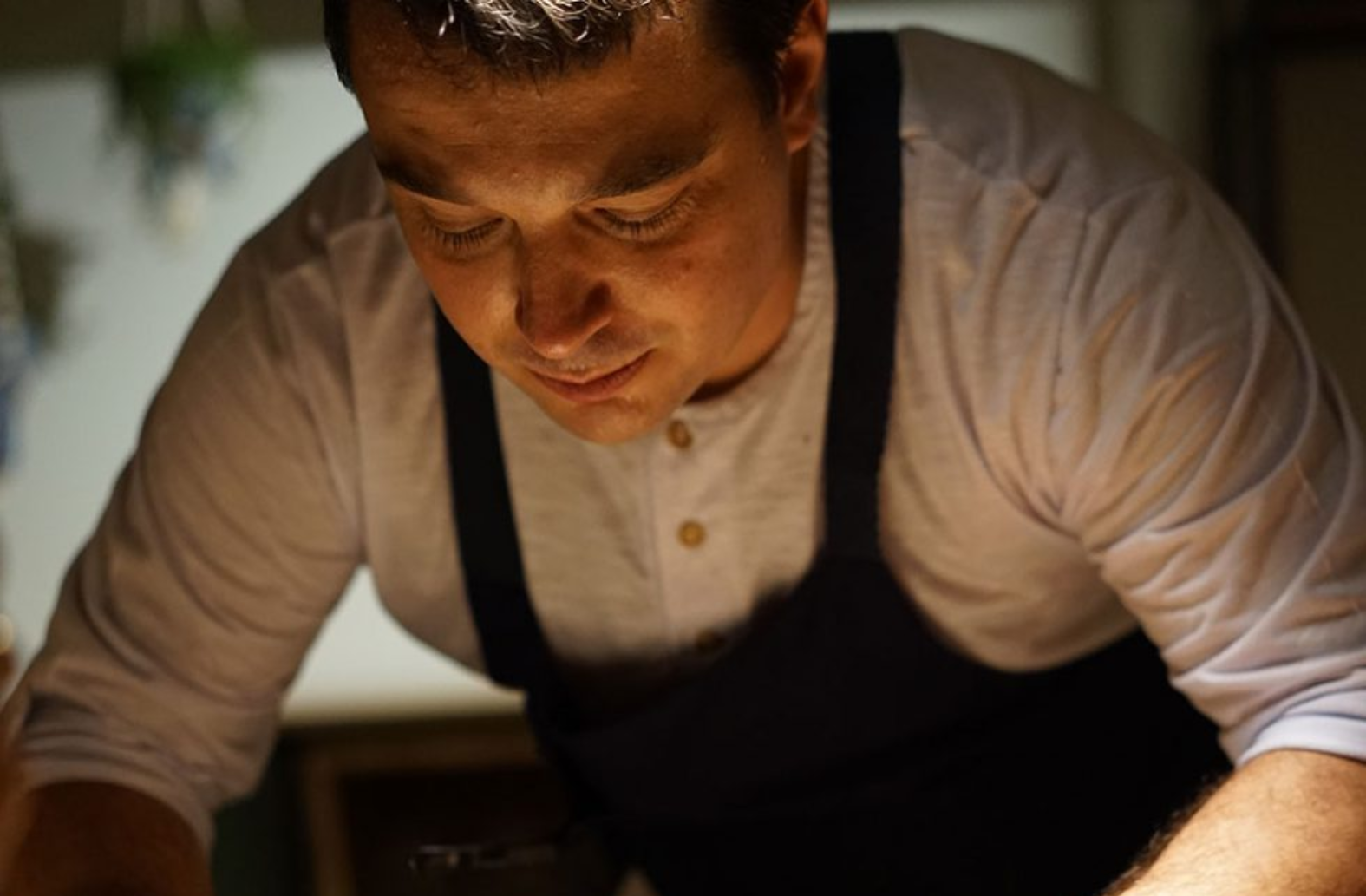
Lasai originally operated from a bigger, colonial townhouse, seating up to 45 guests a night, and Costa e Silva ran himself into the ground trying to hold every plate to the same impossible standard.
“It was very exhausting cooking for 45 people to the standard we maintained,” he admits. “I spent almost 16 hours at the restaurant. I put a lot of pressure on myself. Sometimes, I would lock myself in a corner and cry.”
Two things changed that.
#1 – Obviously, the pandemic. It forced a pause.
#2 – The birth of his son, Emiliano.
In 2022, Lasai moved to a much smaller space – one with just 10 seats, arranged in an L-shape. Guests sit directly in front of Costa e Silva and his team. There is no wall between the kitchen and dining room.
“People arrive at the same time, and we start serving soon after,” he says. “It’s natural that they ask this or that. And honestly, it’s better when it gets lively because it’s a collective process. In the end, people almost always end up talking to each other. It becomes a single table.”
He does not regret the years it took to get there, but he does regret the delay. “Today, I only regret not making this change sooner,” he says. “The restaurant got better, the service improved, the pressure lessened, and we have more calm to work. In short, the life of the entire team improved.”
Consistency is a big thing for Costa e Silva. It “is control and the sensation we want to impact the guest with,” he says.
The wine list follows the same instinct. Sommelier Maíra Freire builds her pairings almost entirely around Brazil, biodynamic and natural wines from Rio Grande do Sul, even a mead made from wild native honey. Nothing is imported for the sake of prestige.
Outside the restaurant, Costa e Silva’s life is super normal. He plays soccer with friends, does CrossFit, and has never once watched the movie “The Bear.” Plus, he eats classic Brazilian barbecue on his days off.
And then there is the dream – “I want to be the president of Flamengo in about ten or fifteen years,” he says of Rio’s most beloved football club. “I swear. Flamengo is one of my greatest passions. I live the club environment; I’m a member, and I want to contribute one day.”