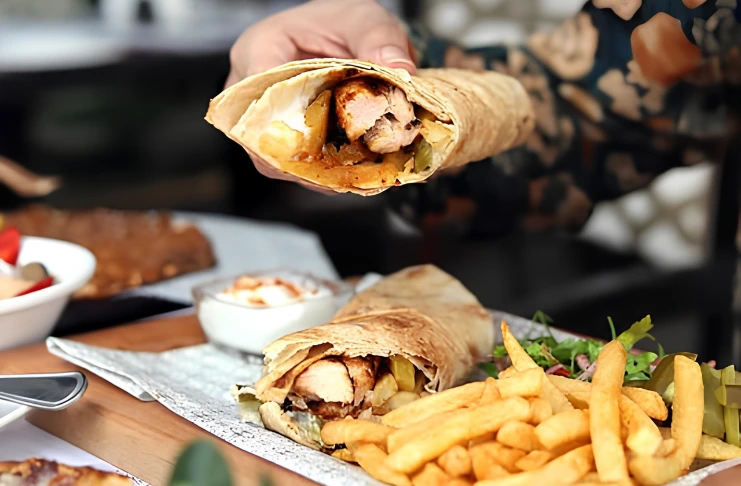

Born into a farming family, Kamal Mouzawak learned early on that food is not decoration. Food is the purest form of a community’s culture. “We have architecture and music and dress,” he said to Forbes, “but I think food is the purest of these forms of expression and the one we take with us. We have five million Lebanese within Lebanon and six million elsewhere. They took nothing with them other than their tabbouleh and kibbeh.”
This realization became a market. Then into a movement. And finally, into Tawlet. The concept of Lebanese food would never be the same again.
From Ten Farmers to a National Movement
Souk El Tayeb, Beirut’s first farmers’ market, was created in 2004 by Mouzawak, who invited ten producers from different regions of Lebanon to participate. This act was deliberately political and peaceful: in a country that had been separated for years because of ethnic, religious, and geographic reasons, it was already an act of reconciliation when Mouzawak invited a producer from the Bekaa Valley, a producer from the Christian east, and a producer from the Shia south to the same market and asked the citizens to purchase their products.
“Nothing can bring the people in a country like Lebanon together as much as the land and food,” Mouzawak told Synergos.
Over the years, the farmers’ market expanded to include more than 100 producers, representing over 90 villages in Lebanon. The market also moved several times and eventually settled in Mar Mikhael. In 2007, Mouzawak organized the first regional food festival, Food and Feast, and in 2009 came the next logical step: Tawlet.
The Farmers’ Kitchen Opens
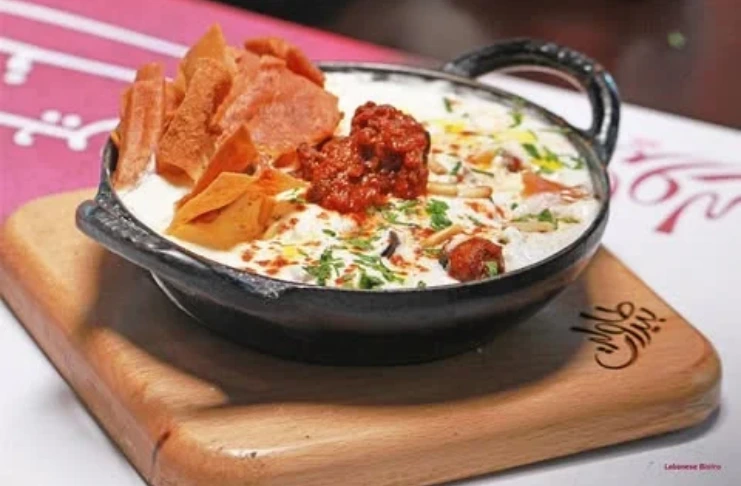
Tawlet, which means table in Arabic, opened in Beirut’s Mar Mikhael neighborhood in 2009 as what Mouzawak’s own organization, Souk el Tayeb, describes as “Lebanon’s first urban farmers’ kitchen.” As the official Souk el Tayeb website puts it: “Our Tawlets are places where cooks tell their stories and traditions through authentic homemade cuisine. Inspired by the hospitality of Lebanese homes, we offer regional cuisine made by local cooks that come from all over Lebanon.”
This dining experience is unique, unlike any other restaurant in the country. It has no single chef or fixed menu. Every day, a new chef from a different part of Lebanon comes and cooks the food of his village. This changing daily buffet is the whole idea behind Tawlet: one day you may enjoy the meals cooked by the grandmother from Douma, and another day – the dishes made by someone from the Bekaa region. “It is a soulful, sunny room where cooks from all over Lebanon show the dishes of their villages,” as World’s 50 Best Discovery says. “It feels like gathering at a Lebanese family home rather than a restaurant.”
Most chefs at Tawlet are women. As the Souk el Tayeb team told Forbes: “In the villages, they do not have many work opportunities. It is always the mother who cooks the food. She holds culinary traditions. This is why we are glad to empower them.” Every woman cooking in Tawlet is raised from housewife to provider within the organization.
A Network Across the Country
Since 2012, Mouzawak has taken the idea of Tawlet to other regions in Lebanon, each based on its regional products and cooks. “Whereas Beirut’s Tawlet was the national Tawlet, the regional Tawlets were local to the women, the produce, and the food,” Mouzawak told Sally Jane in an interview.
The new branches include the Tawlet Ammiq in the wetlands of the Bekaa Valley, the Tawlet Deir el Qamar, the Tawlet Saida, the Tawlet Douma in the stone houses of the Bsharri region, and finally, the main Tawlet in Mar Mikhael. At the original venue, the Mar Mikhael Tawlet meets every Saturday, with the farmers’ market running alongside it.
What It Means

“Mouzawak explained to Lebanon Traveler what sparked the entire process: ‘What sparked me was just the desire to make the world a better place. Success will not be my criteria for success; it is up to others to determine that.”
The World’s 50 Best lists Tawlet Mar Mikhael on its Discovery list. Tawlet has sent chefs around the world to international events, where Lebanese women have cooked for people who have never tried food from their villages. Souk El Tayeb’s Capacity Building Program has mentored and economically supported producers and cooks who have no other place to go.
Every day, a woman who spends her life cooking for her family comes into a kitchen in Beirut and feeds a bunch of strangers. This is it. This is, somehow, everything.