

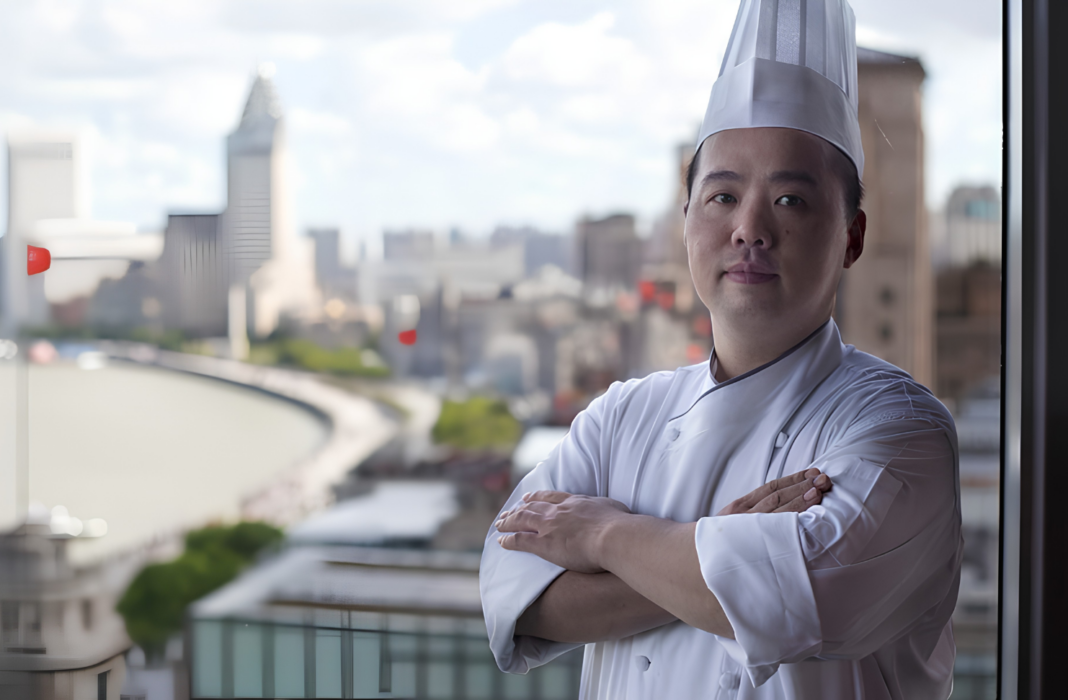

“Food has always been my passion, it’s what fuels our body and brings people together,” says Jacky Zhang, executive chef at Yi Long Court. And perhaps that is what makes the restaurant feel so distinct. While Tang Chi Keung, who previously ran the kitchen, helped build Yi Long Court’s reputation from the ground up, Zhang now carries that legacy forward, bringing his own philosophy to the Cantonese restaurant.
And yet, for all the attention paid to what comes out of its kitchen, Yi Long Court does not immediately feel like a restaurant at all. To be exact, it’s in a five-star hotel on the Bund, but it does not give you the feeling that you’re dining in a hotel. It feels too close to someone’s home that you’re invited to – a wealthy Shanghainese merchant’s home from the 1920s and 30s.
Interior designer Henry Leung, who worked on the space, called it a golden age, rich in layers of culture, where Chinese tradition met Western influence and something new came out of it. With its class-bead chandeliers above wood floors inlaid with brown, maroon, and white mosaic tiles, dark wooden curio cabinets, chairs carved with red padding in the old Chinese style, everything feels so deliberate yet out of place, and maybe that’s the whole point, because whose home is perfectly perfect?
A Cantonese Kitchen
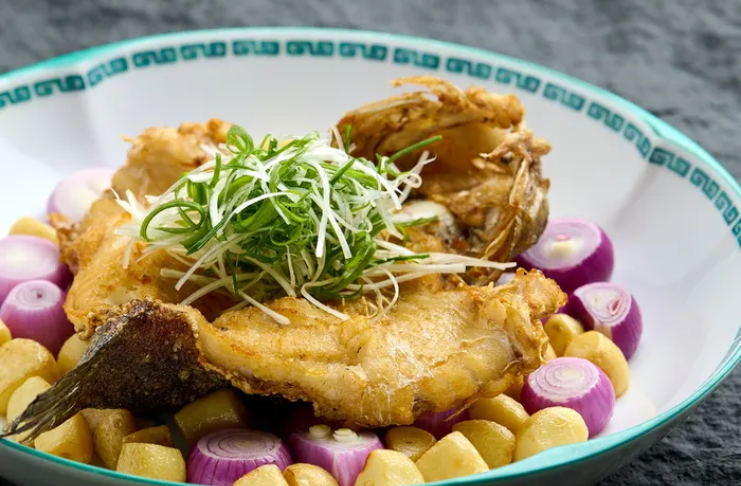
Cantonese cooking is a bit different from Shanghainese food. Where Shanghainese cuisine leans on sugar and braising, Cantonese tradition is about the ingredient itself.
At Yi Long Court, seafood is flown in fresh from international sources as and when required. In its menu, there are dishes like bird’s nest stewed with papaya, sea cucumber, pan-fried scallops (which is, btw, the kitchen’s signature), shrimp-stuffed squid, steamed red snapper with ginger and onion, and other dishes that call for steaming and minimal seasoning.
Dim sum is served daily from 11:30 a.m. to 2:30 p.m., and it includes essentials like barbecue pork puffs, steamed shrimp dumplings, and deep-fried pork dumplings with a blistered crust and a pork-mushroom filling. Dinner runs from 6 to 10:30 p.m.
Autumn and the Hairy Crab
When the hairy crab season comes, the kitchen builds an entire tasting menu around it, a six-course lunch or an eight-course dinner where the crab appears across soup, dumplings, and such other preparations.
It is a distinctly Cantonese USP, i.e., to use the ingredient throughout the meal in different textures and techniques rather than as a single centerpiece.
Hairy crab, in particular, is prized locally for its roe, and it is one of the few moments where the menu steps outside its Cantonese frame and into Shanghai’s own seasonal produce.
The Room, and the Tea
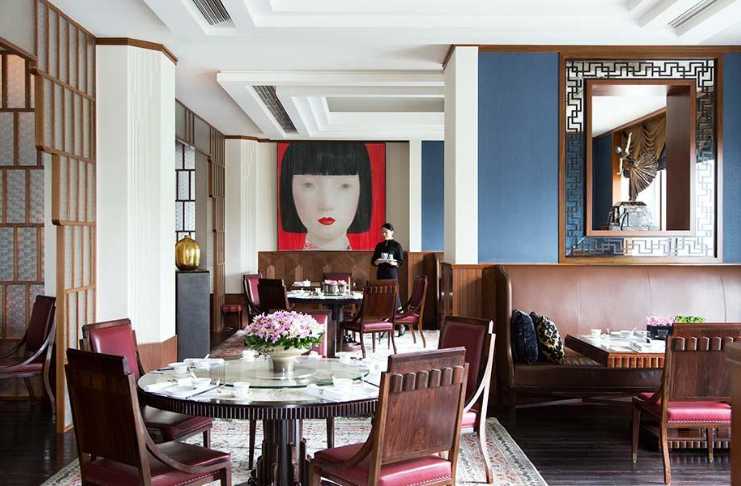
Private dining is the best way to experience Yi Long Court.
Several rooms are designed to feel like home dining rooms while maintaining every standard of a five-star hotel. It is a format with real history behind it. In Guangzhou and Hong Kong, private rooms developed as a way to host business and family occasions with discretion, and Yi Long Court follows that same convention.
There is no cocktail bar in the traditional sense. Instead, there is a tea bar, with an extensive selection of leaves on display and a tea specialist on hand to walk guests through sourcing, aroma, and character. After all, tea holds a central place in Cantonese dining tradition.
As for the overall service, it’s bilingual at the senior level; head waiters and managers are comfortable speaking English, though guests who do not know Mandarin at all might need to repeat themselves occasionally down the service line.
If you’re finally planning to visit Yi Long Court, remember the dress code is smart casual. You can’t wear shorts or open-toed shoes. It’s slacks and a button-down for men, a dress or skirt for women.
Why It Matters
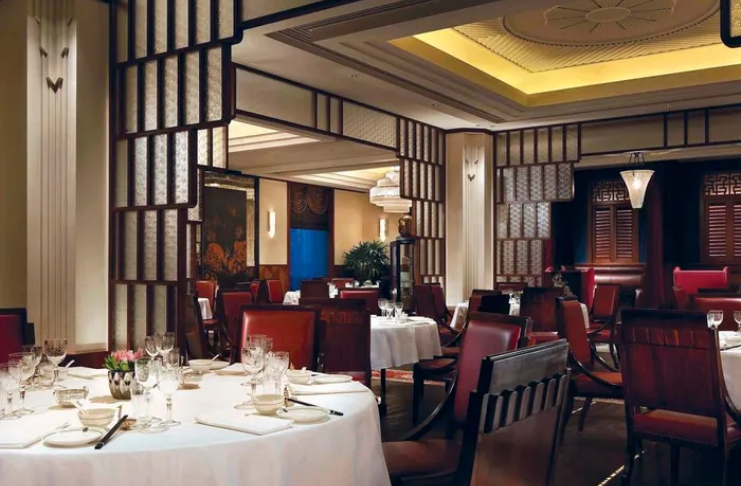
Hotel-grade Cantonese at this level is not very common in Shanghai, unlike in Hong Kong or Guangzhou. The market here is narrower, which makes Yi Long Court’s position more distinct. Today, the restaurant holds one Michelin star, a recognition it has carried into the current Michelin Guide Shanghai, Jiangsu, and Zhejiang, alongside a Recommended rating from the Forbes Travel Guide.
Back in 2017, under Tang Chi Keung, The Peninsula Shanghai was the only hotel in mainland China holding two stars across its restaurants. Today, under Jacky Zhang, the kitchen has evolved, but its commitment to refined Cantonese craftsmanship, longevity, and thoughtful hospitality still holds true. Its reputation was built over years of disciplined cooking, and every meal today feels like another chapter in that story.


