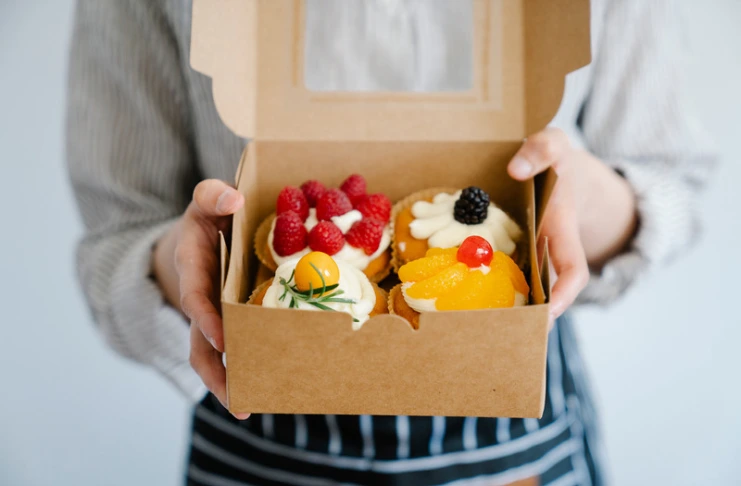

Bakery packaging and delivery is not just an office backroom logistics decision; it is a brand decision. Your bakery box that holds your custom cake, its delivery to your customer, and the moment they open it at home can influence whether they return or recommend you. Great packaging protects the taste of your tasty bakes, supports customer satisfaction, and leaves a lasting impression long after the last bite.
What You Will Learn
- What kinds of bakery and cake boxes suit different products?
- Which material and which kind of customization will keep your product fresh and your brand in focus
- How to ship and deliver your product without lowering the quality
- How to obtain custom bakery boxes wholesale and with a fast turnaround time
Bakery Boxes: The Foundation of Every Packaging Decision
Bakery boxes come in various styles and sizes. Bakery boxes come in different sizes and shapes to fit everything from cupcakes to pies. Custom bakery boxes can be personalized with logos and designs. Bakery boxes can include windows for product visibility and leave a lasting impression. Custom bakery packaging can enhance brand recognition and sales, and the right packaging solutions are the perfect way to showcase your creativity at every step of the packaging journey. Whether you run a small bakery business or a growing chain, bakery boxes and custom packaging are where your brand meets your customers.
INDUSTRY INSIGHT
| The global food packaging market size was valued at $533.22 billion in 2025 and is projected to grow from $564.02 billion in 2026 to $930.89 billion by 2034. |
Box Styles for Different Bakery Items
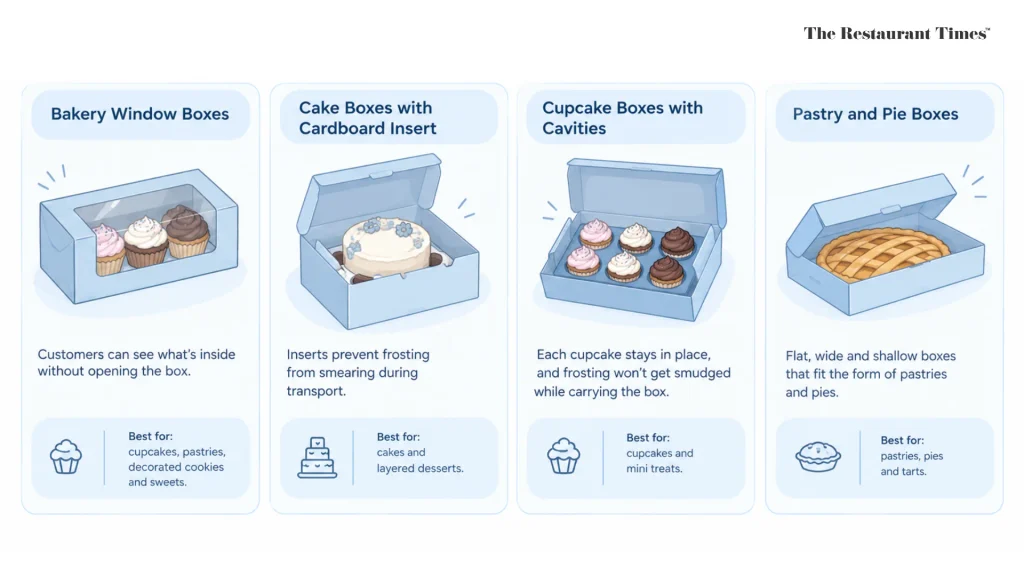
Each bakery product does not come in only one type of box. Choose a box style based on the needs of the bakery product you are selling, and many bakers work with a packaging expert to match box styles to their menu. Bakery packaging can be made from plant-based PLA and recycled paper. Eco-friendly packaging helps reduce carbon footprints for bakeries. Eco-friendly bakery boxes are made from recyclable materials, including 100% recyclable options. The most popular options are:
- Bakery window boxes: Customers can see what is inside without opening the box, thanks to the transparent window; best option for cupcakes, pastries, decorated cookies, and sweets. Bakery boxes can include windows for product visibility.
- Cake boxes with cardboard insert: Cardboard bakery boxes with inserts prevent frosting from smearing during transport. Cardboard bakery boxes with inserts also help protect products from handling damage.
- Cupcake boxes with cavities: Each cupcake will stay in place, and frosting won’t get smudged while carrying the box
- Pastry and pie boxes: Flat, wide, shallow boxes that fit pastries and pies. Pastry boxes in the right size keep confections and pastries in place.
Using the right box styles for every product on your menu helps maintain quality during transport and creates a unified unboxing experience. Rigid multi-layered paperboard boxes prevent crushing of cakes and tarts.
Cake Boxes and Custom Cake Boxes: Protecting Your Highest-Value Products
Custom bakery packaging can enhance brand recognition and sales. Cakes are often the most valuable products in most bakeries and require packaging that protects a fragile, multi-layered product from damage during handling and transport without affecting its presentation, so you can keep decorative details intact.
Custom cake boxes made for your product size range, whether you are wrapping a 6-inch single tier or a three-tier wedding cake, offer the protection, durability, and strength generic bakery boxes may lack. Custom cake boxes should have a strong bottom that will not bend under the weight of the cake board, enough interior space to accommodate a decorated cake with fondant elements or piped decorations, and a strong lock that prevents the box from opening during transport. A well-made cake box is an amazing way to carry your work from your store to the customer’s table.
Every time someone walks through a crowd holding your custom bakery boxes or takes a picture of them before opening, your brand goes around with your product. Strong brands are built this way, one box at a time.
Bakery Packaging Delivery: Materials, Eco-Friendly Options, and Freshness
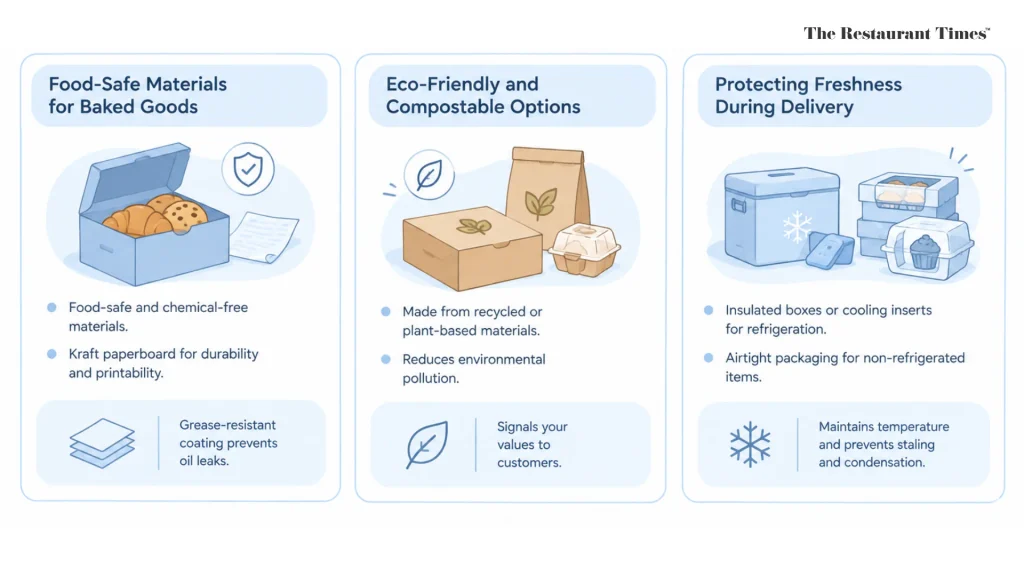
The USA bakery market size is expected to reach $129,700 million by 2031, growing at a 4.1% CAGR. It is necessary to maintain quality. The best bakery packaging materials protect your baked goods from the two primary threats to quality in transit: physical damage and moisture. Packaging material should match the moisture and structural needs of baked goods, and packaging should minimize moisture buildup to preserve product quality.
Food-Safe Materials for Baked Goods
Packaging for bakery products that comes into direct contact with food must be food-safe and should not contain chemicals that may leach into your product. Food-safe materials are essential for direct food contact in packaging. Most bakery boxes use food-grade kraft paperboard because of its durability and printability. The coating’s grease resistance protects your boxes from oil leaks from pastries and cakes. Grease-resistant coatings protect buttery pastries and donuts from leakage.
Different baked goods need different materials. Airtight heat-sealed bags lock in moisture for soft cookies and brownies. Breathable kraft paper bags help maintain the crisp crust of breads. Choosing the right material for each baked good keeps its taste and texture right until the customer opens the box.
Eco-Friendly and Compostable Options
Eco-friendly, compostable packaging has become an important customer expectation for many bakeries. Compostable bakery boxes, made from recycled materials or plant-based paperboard, reduce environmental pollution while maintaining the durability your products need. Many bakery packaging products are certified compostable. In addition, many bakeries realize that eco-friendly packaging signals something to their customers.
Protecting Freshness During Delivery
Bakery items are perishable, and if the package doesn’t account for moisture, it can speed up staling and cause condensation that ruins decorations. If refrigeration is needed, insulated boxes or cooling inserts help maintain the right temperature. Temperature-sensitive items need insulated outer shipping containers. For items that do not need refrigeration, airtight packaging is best. Deliveries should separate rapid perishables from sturdier packaged goods, and optimizing delivery requires balancing logistics with the needs of delicate products.
Custom Bakery Boxes and Custom Packaging: Your Bakery Business Brand at Every Touchpoint
Custom bakery boxes are the most noticeable embodiment of your bakery company’s brand identity. A standard brown box conveys “functionality.” A custom box with your logo and an appealing design means “you are important to us, and we’ve made it for you specially.” Custom boxes are easier to access than small bakery businesses usually think; most packaging suppliers offer free design services and wholesale pricing, keeping unit costs affordable even at small production runs. Many suppliers offer free design support and Wholesale pricing for bakery packaging orders, so you can get the best price on custom packaging.
When considering custom packaging, keep in mind minimum order quantities, customization options (like printing and finishing), fast turnaround times without disrupting production, free-delivery limits, and the ability to request a custom quote for unique box sizes and shapes. Minimum order quantities start at just 100 pieces. No minimum order quantity is required for bakery boxes. Standard production time is 8-10 days for custom boxes. Rush production can deliver in just 4-6 days. Free shipping is available on orders over $50. Free shipping is offered on all orders within the USA. Free shipping is offered on orders over $50. Seasonal discounts of up to 30% are available, but they may be limited in time, so plan your purchases around them.
Shipping and Last-Mile Delivery: Getting Baked Goods There in Perfect Condition
Shipping adds problems that pickup and hand delivery do not; when you ship your items, you are entrusting them to a carrier that does not care about the contents of your package. Design your shipping packaging for the worst-case handling scenario. Some packaging experts also provide free design support to newcomers. Double-boxing helps absorb shock during shipping and protects products.
For baked goods, the packaging process has two stages: the main bakery box that contains the product and the outer shipping box that protects the inner box from outside damage. Use corrugated shipping boxes with at least two inches of padding material in all directions. Wrap delicate pastries and confections individually before placing them in the bakery box. For custom cakes shipped by a carrier, add additional internal braces to prevent the box from shifting.
Free shipping thresholds for packaging materials can reduce costs by limiting how much you stockpile. Automating workflows can minimize errors in order dispatch and packing, and quality checks before dispatch reduce the likelihood of incorrect orders. Real-time customer transparency improves satisfaction during deliveries, and customer feedback can highlight delivery and packaging issues. Good service and the right equipment at the packing table make every delivery smoother.
KEY TAKEAWAYS
| – Right bakery boxes, tailored to your products’ shape, size, and material, help maintain quality during transit. – Bakery boxes customized to your company’s branding will leave a lasting impact and serve as a strong marketing tool. – Eco-friendly and biodegradable packaging materials are becoming the norm for customers. – There should be two stages of packaging when it comes to the transportation of baked goods. |
Frequently Asked Questions
1. What is the best packaging for bakery products?
Match the format to the product: windowed boxes for pastries that need airflow, sealed kraft boxes for products that must retain moisture, and food-safe, grease-resistant materials throughout. For shipping, add refrigerant gel packs for temperature-sensitive products. Custom bakery boxes made from food-grade materials with proper closures maintain freshness better than generic packaging that may not seal correctly.
2. How much does bakery packaging cost?
Bakery packaging can range from a few cents to several dollars per item, depending on the material, size, design, and quantity. Buying in bulk usually lowers the per-unit cost.
3. How do I start a bakery delivery service?
Choose your delivery area, set delivery fees, select reliable packaging, and decide whether to use in-house drivers or third-party platforms. Start with a small delivery radius and expand as demand grows.
4. Where can I buy bakery packaging supplies in bulk?
You can source bulk packaging from local wholesale suppliers, packaging manufacturers, restaurant-supply stores, and online B2B marketplaces. Compare minimum order quantities, customization, and shipping costs.
5. How do I price bakery delivery for customers?
Calculate your driver/labour cost, fuel, packaging, platform fees, and delivery distance, then add a reasonable margin. You can use a flat fee, distance-based pricing, or free delivery above a minimum order value.
6. How do bakeries keep products fresh during delivery?
Use food-grade, appropriately sized packaging with ventilation where needed, secure products to prevent movement, and use insulated bags or temperature-controlled packaging for items that require it.