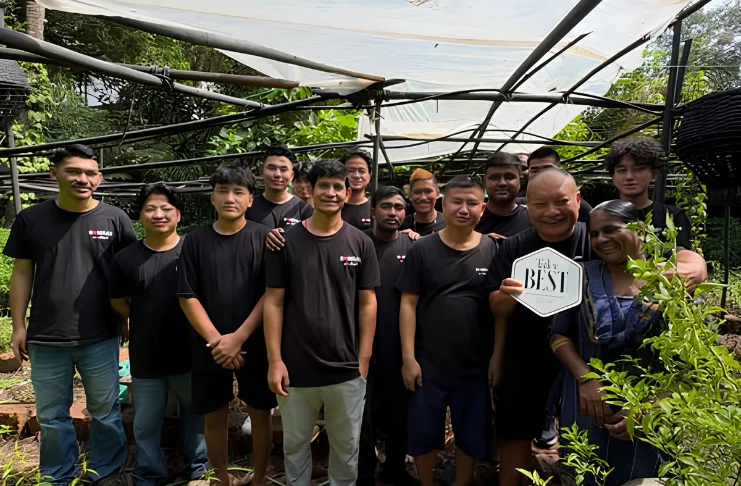

The restaurant is called Bomras, the chef’s name. Not an alternate form of the name, not even a play on it, but his nickname in Burma: Bomras, short for Bawmra Jap, a more intimate and personal way of referring to him. The name hung on the doorway of the restaurant he opened in Goa, announcing clearly the kind of restaurant it was – one where the cuisine would be the product of a man, of his own upbringing, of his home province, of his own memories of how the dishes were supposed to be cooked, brought all the way from the Kachin highlands of northern Burma to a garden in North Goa and served to anyone who walked through that doorway.
People have been walking through that doorway for twenty-two years now.
The Long Road from Kachin to Candolim
Bawmra Jap grew up in Kachin province of Northern Burma, a place defined by its mountains, rivers, forests, and a culinary culture that revolves around a cooking style few parts of the world have experienced. His childhood was marked by foods cooked using techniques passed down to him through generations, foods marinated with the Kachin basil and mango ginger and cooked on banana leaves, foods which were inherently connected to the surroundings.
He left Burma after marrying his British-Iranian wife, Maryam, and became a chef in London. In London, he learned technique, terminology, and the confidence to see how culinary arts can be similar no matter the traditions involved. What he didn’t get there were the herbs his grandmother used, the bamboo his mother used to steam chicken, or the perfect blend of restraint and boldness in Burmese food.
Maryam relocated to Goa for her research, and he followed her. He then told Travel Purist, “Goa inspired me to start a restaurant, and Bomras is still here, thirteen years later.” That was in 2016, and he was just starting his 22nd year in business.
A Humble Start in Candolim
Bomras opened its doors in 2003 as a simple fish restaurant in Candolim, part of Goa’s coast already teeming with beach huts, all serving the same shortened menu. As the Gomantak Times explains, it was “a humble fish restaurant” and has always been unique among everything else around it because of the food it serves, which has never been seen before in Goa. It is a unique Burmese cuisine, inspired by China, Laos, Thailand, and northeast India, refined during the chef’s training in London and using what the Goa coast and his own kitchen garden have to offer.
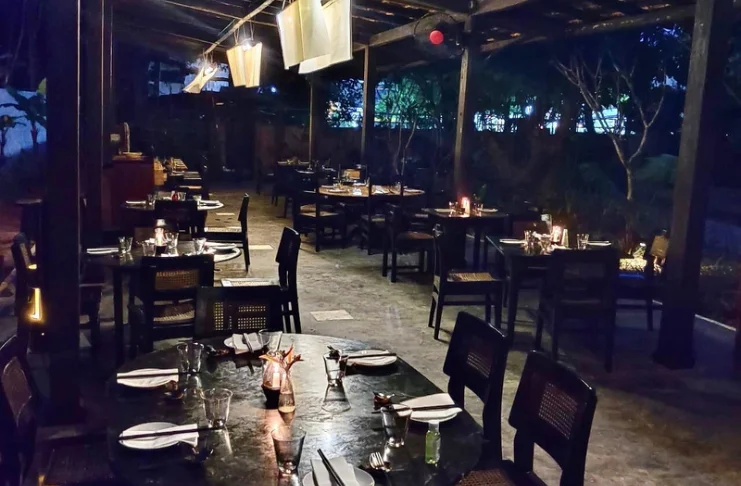
Over time, the Bomras relocated to their present location in Mazal Waddo, Anjuna, settling comfortably in the form that now occupies the best restaurant lists across the country. The place is a garden with indoor and outdoor seating under trees, open from noon to midnight daily. And it is not merely decoration; it is very practical. All the herbs that Bawmra Jap has learned how to cook with in his native Kachin, including Vietnamese coriander, mango ginger, Kachin basil, the herbs that cannot be bought elsewhere in India, are planted in the garden.
“I have brought these herbs with me to Goa, where we grow them in our restaurant garden,” Bawmra Jap told Travel Purist, “and we use the traditional steaming and roasting techniques as well. Ours is a modern take on flavors and techniques that were a part of my childhood.”
The Food: A Cuisine That Cannot Be Classified
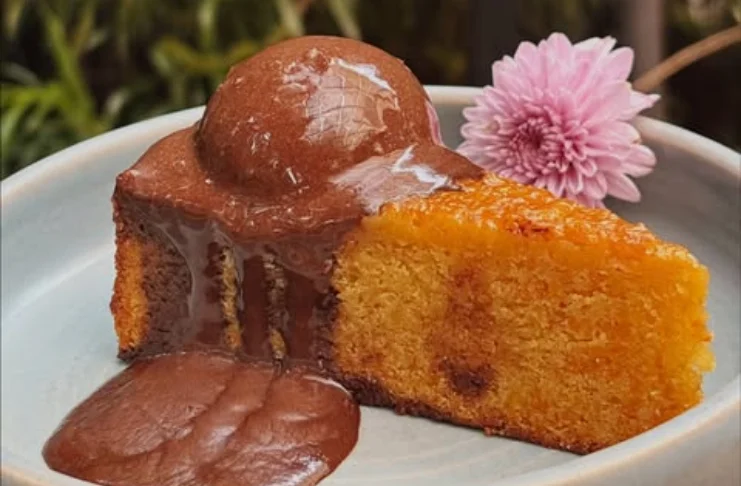
Amitav Ghosh, one of India’s most celebrated novelists, visited Bomras in its early years in Candolim and wrote about it on his personal website in 2011. His verdict was precise: “Bawmra Jap is, in my view, one of the finest and most inventive chefs in the world… His style is unclassifiable: it is perhaps best described as South-East-Asian-inflected modern cuisine.” He listed his favorite dishes as the pickled tea leaf salad, crisp-fried sardines, pomelo salad, pork belly, Kachin chicken, and the warm chocolate cake, which he described as “better than any I’ve had in New York, London, New Delhi, anywhere in fact.”
That is the best one-line summary of the kind of food Bomras offers, since unclassifiable is the most accurate one-word description possible. The food comes from Burma in its essence, based on the traditional recipes from the Kachin province, with its unique tribal cooking style and herbs, but it also combines all the flavors that are found in the countries Burma touches – Sichuan spices, Thai aromas, Lao fermentation, Goan coast taste. It does not come off as fusion cuisine since nothing is mixed simply to create something new. Each dish tells a story and uses the freshest possible ingredients.
Dishes like Kachin Chicken, which consists of boneless chicken parts seasoned with Kachin herbs, wrapped in banana leaf, and cooked by the same traditional method that Bawmra Jap used to see in her native land, accompanied by chili sauce typical for the region, the pickled tea leaf salad, the red snapper with lime and chili, beef seared with basil and coriander, black pomfret with black bean paste, and crackling pork have become signature dishes for many regular customers of Anjuna. “Which is that one dish that tastes of home?” Travel Purist asked him. “Our Kachin chicken dish,” he said, without hesitation.
The cocktail menu is built with the same integrity as the food. Visitors have remembered and written about the tamarind margarita for over a decade.
The Awards
In 2024, Bomras ranked fifth on the Condé Nast Traveler x Zomato Top Restaurant Awards list for India, according to Slurrp. Greaves India, citing CNT reports, says Condé Nast Traveler recognized it as the best restaurant in Goa. It has been listed in the World’s 50 Best Discovery database, featuring those “hidden gems and institutions considered worthy of discovery by the global culinary world.” Fine Dine India, listing India’s 50 best restaurants in 2026, says of Bomras: “Bomras has quietly risen as one of the most celebrated chef-led restaurants of Goa.”
These accolades didn’t come all of a sudden in one year through a PR exercise. These have been garnered over a period of two decades due to the fact that the restaurant has never ceased to be what it has been since the very beginning: honest, personal, and deeply connected with a place and a memory of another place.
What It Means to Eat Here
Bomras operates every day. It doesn’t offer a tasting menu, dramatic service, or a narrative on the back of each dish card. The menu is short, and the setting is a garden. Here, you receive food prepared by a chef who spent his childhood in the mountains of Burma, studied in London, ended up in Goa through an unforeseen path, and realized that India’s coastline offered the herbs his homeland provided.
“We use a modern approach to ingredients and cooking styles that I have experienced as a child,” he explained to Travel Purist. This sentence is Bomras.
As you enjoy Kachin chicken cooked in a banana leaf in a garden in Anjuna, you imagine the distant mountains, the river, and the mother’s kitchen you may never see but recognize, for some reason, in that moment.